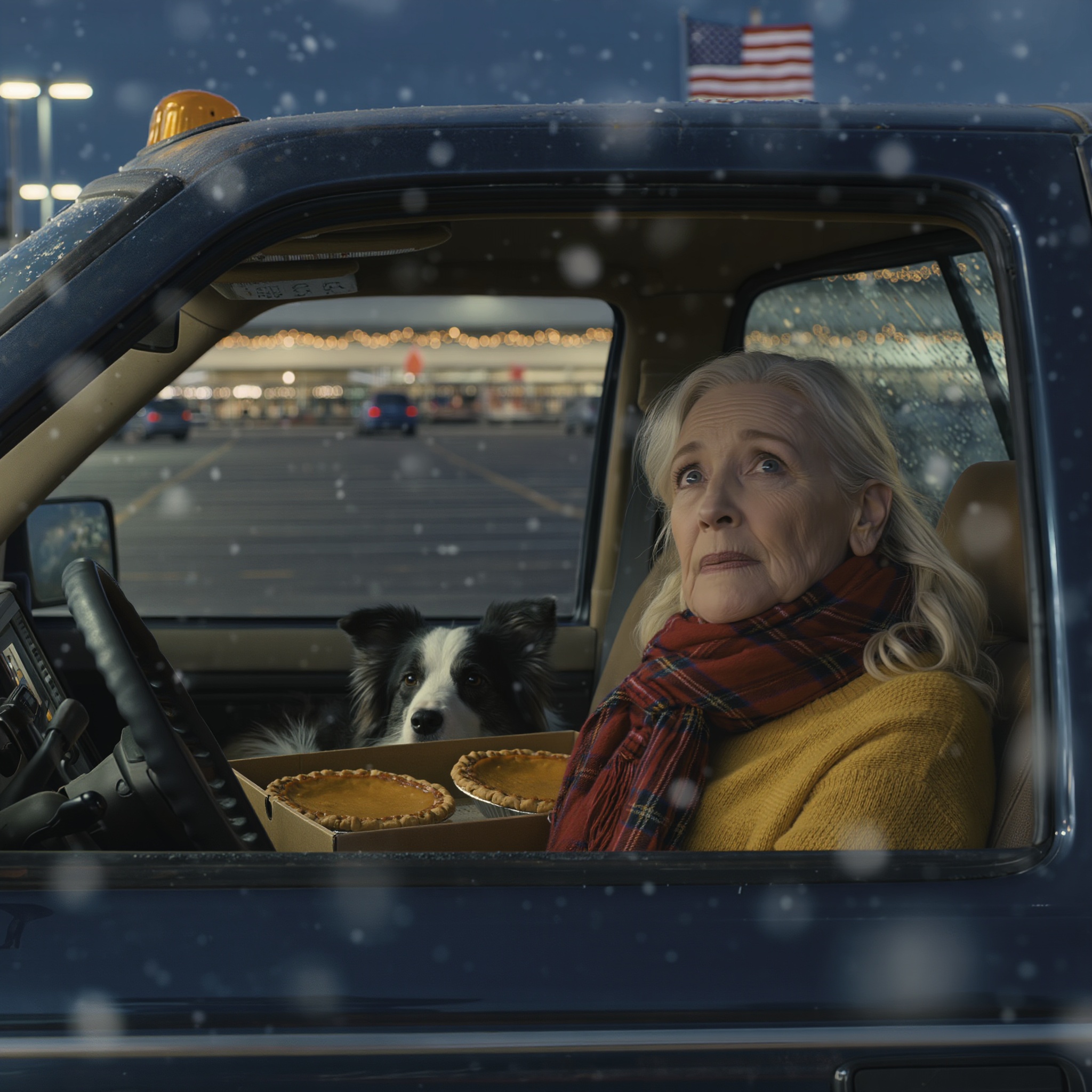
I still remember the day it all started—the day the FOR SALE sign swung gently in the Montana breeze as I signed the final documents.
Forty‑three years of memories gone with a single pen stroke.
“You sure about this, Lillian?” asked Jim Hendricks, my realtor and friend of three decades. His weathered face couldn’t hide his concern.
“This ranch has been in your family since—”
“—since my grandfather built it with his bare hands,” I finished for him, folding the check for $327,000 with trembling fingers.
But Megan needs help with her business venture, I reminded myself. Family comes first. Family comes first.
It was the mantra my late husband, Richard, had repeated throughout our marriage. The philosophy that had guided my every decision since his passing eight years earlier.
Outside, Shadow—my aging border collie with the cloudy eyes and stiff hips—waited patiently in my ’98 Ford pickup. He would be coming with me to the small apartment I’d rented near Seattle, the one two hours from Megan and Brian and my twin grandchildren, instead of the ten‑hour drive that had kept us apart for too long.
“Those grandkids are lucky to have you,” Jim said, handing me a copy of the sale documents. “Moving states at your age, just to be closer.”
“At sixty‑eight I’m not ancient,” I replied with a thin smile, “but I know what you mean.”
Leaving behind my support network, my church community, the neighbors who checked on me during winter storms—it wasn’t a small sacrifice. But the thought of seeing seven‑year‑old Emma and Ethan regularly instead of just on video calls made it feel worthwhile.
That evening, I sat on the porch swing of the ranch one last time, Shadow at my feet. The sunset painted the distant Rockies in shades of purple and gold, a farewell performance I committed to memory.
“We’re doing the right thing,” I told Shadow, scratching behind his ears.
Megan and Brian had a vision for that artisan coffee shop in the Seattle suburbs. They just needed capital. I’d never understood the appeal of seven‑dollar lattes, but Seattle was a different planet from rural Montana—full of Teslas, yoga studios, and people who talked about “branding” more than weather. And besides, we’d be close enough to attend school plays and soccer games.
Two weeks later, after transferring $275,000 to Megan and Brian’s business account, I handed over the house keys to the new owners—a young couple with three kids who looked at the sprawling ranch house with the same hopeful awe Richard and I had once shared.
My new apartment in Washington was small but sufficient: a one‑bedroom unit in a senior living complex east of Seattle, beige carpeting, popcorn ceilings, and walls thin enough to hear my neighbor’s TV game shows. Instead of the scent of hay and pine, the hallway smelled faintly of microwaved dinners and fabric softener sheets.
Shadow adapted faster than I did, finding a sunny spot by the window where he could watch the parking lot and the steady flow of Subarus and SUVs come and go. I tried not to miss the wide‑open sky.
Monthly dinners with Megan’s family kept me going through the adjustment period. The twins seemed to grow an inch between visits. Emma showed me her drawings of unicorns and space rockets; Ethan preferred to explain the rules of whatever new video game he’d convinced his parents to buy.
Megan and Brian, though, were often distracted—checking their phones, answering emails between bites of dinner, lowering their voices into tight, anxious whispers about suppliers, leases, and Instagram influencers.
“The coffee shop is just more demanding than we expected,” Megan explained when I finally asked if everything was all right.
“Seattle’s market is competitive,” Brian added, forcing a laugh that didn’t reach his eyes.
“Is my investment helping?” I asked carefully.
“Of course, Mom,” Megan replied immediately. “We couldn’t have done this without you. We’re just in that challenging early phase. You know how startups are.”
I nodded, remembering the lean years when Richard and I had struggled to make the ranch profitable. Success rarely came overnight. We’d weathered droughts, blizzards, and more than one bank meeting where I’d walked out wondering if we’d still have a roof by Christmas.
As November approached, I felt the old familiar excitement building in my chest. Thanksgiving had always been my holiday—the one where I shined brightest in the kitchen, preparing Richard’s mother’s secret recipe stuffing and my own blue‑ribbon pumpkin pies.
When no invitation came by mid‑month, I told myself not to jump to conclusions. Maybe she was waiting on Brian’s schedule. Maybe they were keeping things simple this year.
Still, three weeks before the holiday, I called.
“Oh, we haven’t finalized plans yet,” Megan said, her voice oddly distracted. “I’ll let you know, okay? Things are just…crazy with the shop.”
“Of course,” I said, forcing cheerfulness. “Just tell me what you need me to bring.”
Days turned into weeks. The trees outside my apartment shed their leaves, and the rain settled into that constant gray drizzle Seattle is famous for. I waited for a text, a call, a simple, Mom, be here at three.
Nothing came.
Two days before Thanksgiving, the loneliness settled over me so heavily I could barely breathe. The senior complex’s activity board advertised a potluck in the common room, but the idea of sitting with strangers over store‑bought pies and lukewarm turkey slices felt more depressing than staying home.
So I made a decision.
I would surprise them.
After all, family shouldn’t need a formal invitation for Thanksgiving. I would bring my famous pies, small gifts for the twins, and my warmest smile. I knew they were busy. I knew stress made people forgetful. But surely my daughter would be happy to see me.
The drive would be long—ten hours if traffic cooperated along I‑90—but the thought of a proper family Thanksgiving after nearly a year of displacement filled me with determination.
“It’ll be worth it, Shadow,” I promised as I packed his bed and food into the truck alongside my small overnight bag.
I woke at three in the morning on Thanksgiving day. The apartment was quiet, the only sound the hum of the old refrigerator and the rain tapping gently against the window. I rolled out dough in the tiny galley kitchen, the motion so familiar my muscles moved on memory alone.
Two pumpkin pies, made from scratch.
Cranberry sauce with orange zest, the way Megan had loved as a child.
A pan of my special yeast rolls that required three separate risings and made the whole place smell like a bakery.
Each recipe carried family history, connections to holidays when Richard was alive and Megan still looked at me with open admiration instead of distracted tolerance.
By six, the truck was packed. By six‑thirty, I was on the highway, the sky still dark over Washington’s evergreen hills. Highway 90 stretched before me like an endless gray ribbon, cutting through forests and mountain passes in the direction of Montana I’d once called home—and now, in the opposite direction, toward my daughter’s new world of investors, latte art, and hashtags.
Ten hours in a truck with temperamental heating wasn’t ideal, especially for a woman my age, but anticipation warmed me more effectively than the sputtering vents.
“We’ll be there by four,” I told Shadow as he dozed on the passenger seat, his graying muzzle resting on his paws. “Perfect timing to help with last‑minute dinner preparations.”
At a gas station near Spokane, I called to check in. The call went straight to voicemail.
“Just wanted to let you know I’m thinking about you,” I said, keeping my surprise intact. “Happy Thanksgiving, sweetheart. See you soon.”
Back on the road, doubt crept in around the edges of my optimism. Perhaps I should have been more direct. Perhaps I should have asked explicitly about their plans instead of dancing around my own fear of rejection.
Late afternoon traffic slowed my approach to Seattle. Rain turned heavier, smearing taillights into red streaks on the windshield. My back ached from the worn seat, and even Shadow seemed restless, shifting and whining softly.
“Almost there, boy,” I assured him. “Almost home.”
The word caught in my throat.
Home.
My home had been the Montana ranch with its familiar creeks and smells, the view of mountains from my bedroom window, the rose bushes Richard planted for our thirtieth anniversary. The apartment near Seattle was just a way station—a compromise to be near family without imposing on them directly.
The neighborhood where Megan and Brian lived looked like a postcard version of suburban America. Tree‑lined streets. Craftsman‑style houses with perfectly manicured lawns. SUVs and luxury sedans parked in neat driveways. A small American flag fluttered from their front porch, and tasteful harvest decorations—white pumpkins, a wreath of dried leaves—framed the door.
Their house glowed with warm light from every window. Cars lined the curb—expensive models with shiny paint and dealer plates I recognized from the kind of business people Brian liked to impress. A catering van sat in the driveway, its back doors open as staff hurried in and out with silver trays.
I found a spot half a block away and checked my reflection in the rearview mirror. The drive had left my silver hair slightly mussed, and fatigue shadowed my eyes. I smoothed my sweater, pinched some color into my cheeks, and decided that love mattered more than appearances.
“Wait here,” I told Shadow, cracking the windows. “I’ll come back for you once I’ve said hello.”
Balancing the pies and my cranberry sauce, I made my way up the walkway. Through the decorative glass panels on the front door, I saw movement inside: people in cocktail attire holding wineglasses, servers weaving through the crowd with trays, laughter floating through the evening air along with the unmistakable aroma of roasting turkey and sage stuffing.
My stomach rumbled. I’d eaten nothing but a granola bar since breakfast.
The doorbell chimed cheerfully when I pressed it, and I straightened my shoulders, already imagining the twins’ faces lighting up when they saw their grandmother unexpectedly appear on Thanksgiving.
The door swung open.
Megan stood there, stunning in a burgundy dress I’d never seen before. Her chestnut hair was swept into an elegant updo, her makeup flawless, her gold earrings catching the warm light from inside. For a brief second, her smile was the genuine one I remembered from her childhood.
Then she registered it was me.
Her smile froze. Her eyes widened—not with delight, but with a flash of pure panic.
“Mom,” she gasped, stepping quickly onto the porch and pulling the door nearly closed behind her, cutting off the view of her guests. “What are you doing here?”
The question, delivered in a harsh whisper, hit me like a physical blow.
“I was…surprising you for Thanksgiving,” I answered, confusion dampening my excitement. “I brought pies, and rolls, and—”
“You should have called,” she interrupted, glancing nervously over her shoulder at the gathering inside. “This isn’t a good time.”
Behind her, a burst of laughter rose from the party.
A man’s voice called out, “Megan? Who is it?”
“No one,” she called back, bright and false. Then she turned to me again, eyes pleading. “Mom, I’m sorry, but this is actually a business event.”
“A business event?” I repeated, shifting the weight of the pies in my arms. “On Thanksgiving?”
“It’s a strategic dinner,” she said, her voice tight. “We’re hosting potential investors for the coffee shop. These people could save our business. I can’t have distractions right now.”
The word landed with devastating clarity.
Distractions.
I was a distraction. An inconvenience. An embarrassment to the image they were trying to project.
“I see,” I said quietly. Something cold and hard formed in the center of my chest. “I drove ten hours to see my family on Thanksgiving, but I’m…a distraction.”
Megan flinched, color rising in her cheeks. “Mom, we’ll do a family Thanksgiving another time. I promise. I just—tonight, I need everything to be perfect.”
We both knew what those words really meant.
You don’t belong here today.
You don’t fit into the picture we’re trying to paint.
“Where am I supposed to go?” I asked, my voice barely audible above the party noise spilling from inside. “I drove ten hours. I can’t just turn around and drive back tonight.”
Megan glanced at her diamond watch—a gift from Brian on their tenth anniversary that she’d shown off with such pride the last time we’d FaceTimed.
“There’s a Holiday Inn Express about fifteen minutes from here,” she said. “It’s nice. They probably still have rooms.”
“Megan,” I said, reality settling heavily on my shoulders, “I spent nearly all my money helping you and Brian start the coffee shop. I can’t afford a hotel near Seattle on a holiday weekend.”
Irritation flashed across her face before she smoothed it away. “Mom, I’m sorry, but you really should have called first. We have a full house of very important people.”
Through the narrow gap in the door, I saw Brian in the dining room, charming a group of well‑dressed guests, gesturing animatedly with a glass of wine in his hand. The twins were nowhere in sight—probably upstairs with a sitter, kept away from the grown‑up event.
“Could I at least see Emma and Ethan?” I asked, clinging to a scrap of hope.
“They’re already in bed,” Megan lied smoothly.
I knew it was a lie because I could hear children’s laughter from somewhere inside the house.
“It’s a school night,” she added.
“It’s Thanksgiving break,” I pointed out.
Her smile tightened. “Mom, please. I need to get back to my guests.”
A tall man in an expensive suit appeared behind her, curiosity written all over his face.
“Everything all right, Megan?” he asked. “We’re about to start the investment presentation.”
Megan’s spine stiffened. Her voice slipped easily into its social register.
“Everything’s fine, Lawrence,” she said. “Just a delivery mix‑up.”
A delivery mix‑up.
That was what I had been reduced to. Not a mother who had sold her home to help finance their business. Not a grandmother who had driven across three states to share a holiday.
Just a mix‑up on the porch.
“Of course,” Lawrence replied, his gaze sliding over me with the practiced dismissal reserved for service workers and other people deemed irrelevant. “Brian’s ready when you are.”
“I’ll be right there,” Megan promised him with a dazzling smile that vanished the moment he retreated.
She turned back to me, her patience clearly fraying.
“Mom, I’m really sorry about the confusion, but I need to go.”
“Take the pies at least,” I said, holding them out like an offering. A final attempt to be useful. To matter.
She glanced at the homemade desserts, then shook her head.
“The caterer brought harvest tarts from that French bakery downtown,” she said. “These might clash with the menu theme.”
Each word landed like a tiny dagger.
My pies, made with the recipe passed down through three generations of our family, would clash with their sophisticated event.
“I see,” I said again, because what else could I say? “Happy Thanksgiving, Megan.”
“We’ll call you tomorrow,” she promised, already backing toward the door. “Maybe we can meet for coffee next week.”
The door closed with a soft but definitive click, leaving me standing on the porch with cooling pies and congealing cranberry sauce, the weight of rejection far heavier than the food in my arms.
For a long moment, I just stood there.
Through the decorative glass, I watched Megan rejoin her party, touching Lawrence’s arm with practiced charm, throwing her head back in laughter at something Brian said. No one looked toward the door. No one wondered about the older woman left standing in the November chill.
I had been dismissed—erased from the evening as cleanly as an unwanted brushstroke painted over on a canvas.
The walk back to my truck felt endless.
Shadow greeted me with a concerned whine, his warm tongue licking my hand as I placed the rejected food on the passenger seat.
“Change of plans, boy,” I told him, my voice breaking on the last word. “We’re not staying after all.”
Tears blurred the streetlights as I drove aimlessly away from Megan’s house, with no destination in mind beyond away.
The bright homes I passed held families gathering around tables, sharing meals and memories, engaged in the simple act of being together on a day dedicated to gratitude.
What exactly was I supposed to be grateful for?
Not my daughter, who had dismissed me like an inconvenient delivery.
Not my home, which I had sold to help ungrateful children.
Not my future, which suddenly stretched before me empty of purpose.
When the tears made driving dangerous, I pulled into a supermarket parking lot—a Safeway off the highway—choosing a far corner away from the few cars belonging to employees working the holiday.
The store was closed, its darkened windows reflecting my truck’s headlights before I switched them off. The giant red SAFEWAY sign loomed over the asphalt like a silent witness.
The silence felt absolute. Even Shadow seemed to understand the gravity of the moment, pressing his warm body against my side as I finally allowed myself to weep—for the ranch I’d loved, for the daughter I’d lost somewhere along the way, for the holiday traditions that had died with Richard and would never be resurrected.
“What do we do now?” I whispered into the darkness, not expecting an answer.
Shadow nudged my arm with his nose and gave a low, comforting woof. My stomach rumbled loudly, reminding me I’d never actually eaten dinner. The pies and cranberry sauce sat on the floorboard where I’d placed them, a pathetic reminder of my rejected offerings.
“We’ll survive tonight,” I murmured, more to myself than to him. “We’ve survived worse, haven’t we?”
I reclined the driver’s seat as far as it would go and pulled an old blanket from behind the bench. It wasn’t much protection against the damp Washington cold, but it would have to do.
“Good night, boy,” I whispered.
Shadow curled into his customary spot against my side, the steady rhythm of his breathing a small anchor in a world that had shifted too quickly beneath my feet.
Cold seeped through the truck’s metal frame despite the blanket wrapped tightly around my shoulders. November in the Seattle area brought a bone‑deep chill that felt different from Montana’s dry cold. It sank into your bones and your spirit with equal persistence.
Every passing set of headlights made my heart jump—a foolish, reflexive hope that Megan might have come looking for me, realized the cruelty of her dismissal.
But each car passed without slowing.
The parking lot settled into complete darkness, save for the distant glow of streetlights and the occasional rumble of a semi‑truck on the nearby freeway.
Sleep came in fitful bursts, interrupted by discomfort and intrusive thoughts.
How had my relationship with Megan deteriorated to this point?
When had I transformed from beloved mother to embarrassing inconvenience?
Richard would have known what to do. He’d always been the one who could reach Megan during her difficult teenage years, finding the right balance of firmness and understanding. I had been the soft touch—the one who baked cookies after school and tended scraped knees with kisses and bandages.
“We raised her better than this,” I whispered to the empty cab. “Where did we go wrong?”
Around one‑thirty in the morning, unable to sleep, I reached for my phone. The screen lit up the cab with harsh blue light. No messages from Megan. No missed calls. Just a notification from my Montana neighbor, Martha Jennings: CALL WHEN YOU CAN. IMPORTANT.
Guilt pinched at me. Martha had been my closest friend back home. I’d meant to stay in better touch.
Another text from her came in as I stared at the screen.
Lillian, please call when you get this. Important news about Clayton.
Clayton Bennett.
My reclusive neighbor back in Montana, whose property had adjoined the ranch for decades. A cantankerous old bachelor who mostly kept to himself, though I’d made a point of checking on him regularly after Richard died—bringing soup during his bouts of bronchitis, picking up his medications when winter roads made driving hazardous for someone his age.
My concern for him momentarily overshadowed my own heartbreak. I dialed Martha’s number despite the late hour, knowing she wouldn’t have texted twice if it wasn’t serious.
She answered on the first ring.
“Lillian, thank God,” she said. “I’ve been trying to reach you all day.”
“I’ve been driving,” I said, glancing around at my current surroundings and choosing not to elaborate. “What’s wrong? Is Clayton all right?”
Silence stretched for a beat too long.
“No, honey,” she said gently. “He passed three days ago. Peacefully, in his sleep.”
I closed my eyes as a wave of sadness washed over me. Clayton had been a fixture in my Montana life. Not exactly a friend, but a presence as familiar as the mountains themselves.
“The funeral’s tomorrow,” Martha continued. “But that’s not why I’ve been trying to reach you.”
“Why then?”
“His lawyer’s been calling around trying to find you. Says it’s urgent you contact him.”
“His lawyer?” I repeated, startled. “Why on earth would Clayton’s lawyer need to talk to me?”
“Wouldn’t say,” Martha replied. “Just that it’s important. I wrote down his number. You got a pen?”
I rummaged in my purse and found an old gas station receipt and a pen that still worked.
After I hung up, I sat in the darkness, adding Clayton’s death to the growing list of losses: the ranch, my sense of purpose, my place in my daughter’s life, and now yet another thread severed from the tapestry of my former world.
“Just you and me now, old boy,” I whispered to Shadow as he shifted in his sleep.
Outside, a late‑night drizzle began to patter against the windshield, turning the parking lot into a glistening black mirror. No stars, no moon—just city glow and clouds.
Eventually, exhaustion overpowered grief, and I drifted into uneasy sleep.
Morning arrived with stiff joints and frost patterns on the inside of the truck windows. I’d slept perhaps three hours total, waking repeatedly to adjust my position or pull the thin blanket tighter.
The Safeway sign now glowed cheerfully in the early light. Employees in red vests hurried toward the entrance, clutching paper cups of coffee. A few shoppers, eager for Black Friday deals, waited for the doors to open.
I sat up slowly, my back and neck protesting.
My reflection in the rearview mirror confirmed my fears—flattened hair, dark circles under my eyes, an overall appearance of someone whose life had come undone.
Which, I supposed, was accurate.
The gas gauge hovered just above a quarter tank. Enough to get somewhere, though I had no idea where.
The thought of driving ten hours back to my empty apartment made my stomach twist. Staying near Seattle seemed equally pointless. Megan had made her feelings very clear.
Inside the store, I used the restroom like a makeshift washroom—splashing cold water on my face, running damp fingers through my silver hair, brushing my teeth with the travel kit I always kept in my purse.
The woman at the sink next to me studiously avoided eye contact, the way people do when confronted with someone else’s obvious misfortune.
Back in the parking lot, I poured kibble into Shadow’s bowl and set it by the truck. He ate with grateful enthusiasm, blissfully unaware of mortgages, inheritances, or failed Thanksgivings.
I chewed a stale granola bar from the glove compartment and washed it down with lukewarm water from a half‑empty bottle.
Clayton’s lawyer.
I glanced at the time on my phone. 7:43 a.m.
It was early, but law firms kept odd hours around estates and emergencies, didn’t they? Besides, what else was I going to do? Sit in my truck in a grocery store parking lot and feel sorry for myself?
Before I could talk myself out of it, I dialed the number Martha had given me.
“Wallace, Harrington and Schmidt,” a receptionist answered.
“I was told to call James Harrington,” I said. “This is Lillian Winters.”
“One moment, please.”
A few seconds later, a male voice came on the line.
“Mrs. Winters? This is James Harrington. Thank you for calling. I’ve been trying to reach you.”
“I heard about Clayton,” I said. “I’m so sorry. He was…a good neighbor.”
“He spoke highly of you as well,” Mr. Harrington replied. “Mrs. Winters, are you currently in Montana?”
“No,” I said, glancing at Shadow and the Safeway sign. “I’m in Washington. Visiting family.”
It wasn’t entirely a lie. Just missing some crucial details.
“I see,” he said. “Well, this is somewhat irregular, but given the circumstances, I can discuss the relevant details by phone. Mr. Bennett was quite specific about timing.”
“I don’t understand what any of this has to do with me,” I said. “Clayton and I were just neighbors.”
“That’s not entirely accurate from a legal perspective,” he replied. “Mrs. Winters, Mr. Bennett named you as the sole beneficiary of his entire estate.”
I went completely still.
“That can’t be right.”
“It is,” he said gently. “He amended his will six months ago, specifically naming you—Lillian Margaret Winters—as his sole heir. The estate includes his ranch property, his investment portfolio, and liquid assets totaling approximately one point five million dollars.”
My hands began to shake so badly I almost dropped the phone.
“One point…five…million?”
“Yes, ma’am,” he said. “In fact, as per Mr. Bennett’s instructions, the transfer to your account was initiated yesterday. You should have received notification from your bank.”
I hadn’t checked my bank account in days. It had become too painful to watch the numbers drop.
“But…why?” I asked. “Why would he leave everything to me?”
“There’s a letter,” Mr. Harrington said. “He left it with his instructions, to be delivered once we made contact with you. I can email you a scanned copy right now.”
He asked for my email address. I gave it to him mechanically.
“His explanation is in his own words,” the lawyer added. “But to paraphrase, you were, in his view, the only person who showed him genuine kindness without expecting anything in return.”
A lump formed in my throat.
“I…I don’t know what to say,” I whispered.
“You don’t have to say anything yet,” he replied. “Review the letter when you can. And perhaps check your bank app, just to be sure the transfer completed properly.”
After we hung up, I opened my banking app with trembling fingers.
Where less than three thousand dollars had been sitting the last time I’d checked, there now appeared an impossible number.
Seven figures.
I stared, utterly stunned, as condensation from my breath fogged the inside of the windshield.
“It’s real,” I whispered to Shadow. “It’s actually there.”
He thumped his tail against the seat, unconcerned with zeros but attuned to the change in my voice.
“Everything’s changed, boy,” I said softly. “Everything.”
The coffee shop where I chose to open Clayton’s letter was nothing like Megan and Brian’s artisan café with its reclaimed wood counters and fancy pour‑over setup. This was a simple roadside diner just off the interstate—vinyl booths, laminated menus, college football playing on a muted TV, and bottomless coffee poured from a heavy glass pot.
The kind of place Clayton would have approved of.
I parked in a corner spot where I could keep an eye on Shadow in the truck, cracked the window for him, set out fresh water, then went inside and found a booth near the back.
The waitress brought me coffee without asking, as if she could tell I needed it.
“Let me know when you’re ready to order, hon,” she said kindly.
I nodded, then opened my email.
The subject line read: LETTER FROM CLAYTON BENNETT.
I clicked it open.
Dear Lillian,
If you’re reading this, it means I finally kicked the bucket.
Don’t waste time feeling too sad about it. At eighty‑three, I’ve had a decent run, even if I spent most of it being what folks around here politely call “a character.”
I snorted softly. That sounded exactly like him.
I’m not one for flowery speeches, so I’ll get right to it.
I’m leaving you everything I own—the ranch, the investments my brother bullied me into making before he passed, and whatever cash is sitting in my accounts. James Harrington tells me it adds up to a tidy sum, though money never meant much to me beyond keeping the ranch going.
You’re probably wondering why.
Fair question.
Here’s your answer.
In forty years as neighbors, you’re the only person who ever showed me kindness without wanting something in return.
I paused, the words blurring as tears filled my eyes.
Remember that blizzard back in ’09 when the power was out for nine days? You and Richard checked on me twice a day, brought hot food, and made sure my generator was fueled. When Richard passed and half the county showed up with casseroles for you, then disappeared once the funeral was over, I noticed how you still found time to bring me soup when my bronchitis acted up.
Small things, maybe. But they showed your character.
This world’s full of people who are kind when it’s convenient or when others are watching. You’re kind when it’s difficult and when no one would notice if you weren’t.
I swallowed hard, blinking rapidly.
I’ve watched how your daughter treats you. Visits getting shorter and less frequent. Phone calls where she’s clearly doing something else while talking to you. That business with the fancy coffee shop where your money was welcome, but your opinions weren’t.
Don’t look surprised.
Small towns run on observation and gossip, and I’ve had plenty of time for both.
The point is, you deserve better than being treated like an ATM with inconvenient emotions attached.
You deserve to live your remaining years with dignity and purpose—not watching your savings dwindle while waiting for crumbs of attention from people who don’t appreciate you.
So here’s what I propose from beyond the grave.
Take my money and property and use them to build the life you actually want—not the one your daughter thinks you should quietly fade away in.
The east pasture gets good morning light. Would make a fine spot for those therapeutic riding lessons you always talked about for special‑needs kids. The old bunkhouse could be converted into a nice office or classroom space.
Just ideas.
Whatever you decide, it’s yours, free and clear.
The therapeutic riding program.
A dream I’d mentioned once or twice in passing on his porch when he’d grumbled about the county fair or the kids today. I never imagined he’d actually been listening.
One condition to all this.
You can’t give or loan any of it to that coffee shop venture.
Not because I’m trying to control you from the grave, but because you’ve already given enough to people who don’t appreciate the sacrifice.
Time to look after Lillian for a change.
If you’re wondering why I never said any of this while I was alive—well, some things are easier to say when you don’t have to watch somebody get emotional about them. I’ve never been comfortable with feelings, mine or anyone else’s.
Take care of that old dog of yours. He’s a good judge of character. Always wagged his tail for me, even when I was being an ornery cuss.
—Clayton Bennett
P.S. I paid for my funeral in advance. Simple pine box. No church service. Already squared away with Miller’s Funeral Home. Don’t let them upsell you on anything fancy or I’ll come back and haunt you for wasting money.
By the time I finished the letter, my coffee had gone cold.
Clayton, the gruff neighbor who’d grumbled about kids and politics and the price of diesel, had seen me more clearly than my own daughter.
He had seen the pattern I’d been too stubborn—or too afraid—to acknowledge.
I had allowed myself to be used, to be taken for granted, to be gradually shifted from the center of my own life to the margins of someone else’s.
I set the letter down and stared out the diner window at the truck where Shadow waited patiently, his ears perked up every time someone walked by.
Clayton was right.
I needed something to build again. Something that belonged to me.
The ranch—his ranch, now my ranch—was calling me home.
But first, I had one stop to make.
Megan’s street looked different in daylight.
Less glamorous. More ordinary.
The catering van and luxury cars were gone. Only their family vehicles remained in the driveway now—a late‑model SUV and Brian’s sedan. Empty wine bottles stood in a cluster near the garbage cans, waiting for recycling.
I parked directly in front of their house this time.
No more hiding half a block away.
“Stay here, boy,” I told Shadow. “This won’t take long.”
The doorbell chimed just as it had the night before. I stood a little straighter, the weight of Clayton’s letter and my own reclaimed self‑respect holding me upright.
Brian opened the door.
“Lillian,” he said, surprise flickering across his face before he pasted on a polite smile. “We were just about to call you.”
I doubted that very much.
“Come in, come in,” he said quickly. “Can I get you some coffee?”
“No, thank you,” I replied, remaining in the entryway even as he gestured toward the living room. “I won’t be staying long. Is Megan home?”
“She’s just getting the kids ready for—” he began.
Megan appeared at the top of the stairs, wearing expensive athleisure wear and a hastily tied ponytail that still somehow looked styled.
“Mom,” she breathed, stopping short when she saw me.
I watched the emotions flicker across her face—guilt, surprise, calculation.
“We were going to call you today,” she said. “About last night. The timing was just—”
“I’m not here for explanations or apologies,” I said calmly. “I’m here to say goodbye.”
“Goodbye?” she repeated, thrown off script. “What do you mean?”
“I’m returning to Montana today,” I said. “Permanently.”
Brian moved closer to her, the two of them unconsciously forming the united front they had always presented—whether they were talking to bank managers, investors, or, apparently, inconvenient mothers.
“But your apartment,” Megan said. “The lease, your doctor appointments—”
“I’ll handle it,” I replied. “Some things have changed since yesterday.”
Her eyes narrowed a fraction in that quick, appraising way I’d seen her use in business meetings.
“What things?” she asked.
“My neighbor, Clayton Bennett, passed away,” I said evenly. “He left me his ranch. And some other assets.”
“How much ‘other’?” Brian asked, the question blurting out before he could catch himself.
“Enough,” I said. “Enough that I won’t be sleeping in my truck again.”
Their eyes widened.
“You slept in your truck?” Megan whispered.
“Yes,” I said. “In a Safeway parking lot. After you turned me away on Thanksgiving.”
Brian winced.
“Lillian, you should have told us,” he said. “We would have—”
“What?” I asked quietly. “Found room for me after your important guests left? Opened the door once the investors had gone home and there was no one left to be embarrassed in front of?”
Silence answered for them.
“I sold my home—our family ranch—to help finance your business venture,” I continued. “I gave you everything I had. And you couldn’t even let me use your guest bathroom.”
Megan’s eyes filled with tears she tried to blink back.
“Mom, I’m sorry,” she said. “We were desperate. The business—it’s not doing well. Brian made some investments that didn’t—”
I held up a hand.
“I’m not interested in the details,” I said. “Whatever financial hole you two have dug yourselves into, you’ll have to climb out of it without my help.”
“Mom,” she pleaded, “we’re family.”
“Yes,” I said. “We are. And that used to mean something.”
I took a breath.
“The money Clayton left me comes with a condition,” I said. “I’m not to give or loan any of it to your coffee shop. And this time, I’m going to honor someone else’s good judgment instead of ignoring my own.”
Footsteps pattered on the stairs.
“Grandma!”
Emma and Ethan barreled into the entryway, still in their pajamas, faces bright with genuine delight.
My heart squeezed.
“Hi, my loves,” I said, kneeling to hug them, breathing in the sweet scent of shampoo and maple syrup.
“We didn’t know you were coming for Thanksgiving,” Emma said, her brow furrowing. “Mom said you were too busy.”
The simple statement hung in the air like a verdict.
Over the children’s heads, I met Megan’s eyes. Shame colored her cheeks.
“I’m afraid I can’t stay today,” I said gently to the twins. “I’m heading back to Montana. But I wanted to see you before I left.”
“Montana?” Ethan asked. “Where the horses are?”
“That’s right,” I said, smoothing down his cowlick. “And guess what? I have a ranch again now. With real horses and lots of space to run.”
“Real horses?” Emma gasped, eyes going wide.
“Real horses,” I promised. “And Shadow is in the truck, missing you terribly.”
“Can we see him?” Ethan begged.
I glanced at Megan.
She hesitated, then nodded.
“Five minutes,” she said softly.
Outside, the cool air hit my cheeks as we walked to the curb. The twins squealed when they saw Shadow’s familiar black‑and‑white head pop up in the window.
“Shadow!”
He whined with excitement as they threw open the door and climbed halfway in, showering him with hugs and kisses.
For a few minutes, everything felt simple again—just a grandmother, two grandkids, and an old dog who loved them all.
When it was time for them to go back inside, I straightened up and turned to Megan.
“The twins are welcome to visit me anytime,” I said. “That door will always be open.”
She nodded, tears sliding freely down her cheeks now.
“Mom, I really am sorry,” she whispered.
“I know,” I said. “But sometimes sorry isn’t enough to undo what’s been done. Sometimes it’s just the beginning of learning to do better.”
I got into the truck.
In the rearview mirror, I saw my daughter standing on her immaculate porch, hugging herself against the morning chill, watching me drive away.
This time, I didn’t look back.
Montana was calling me home.
The Welcome to Montana sign appeared as the afternoon sun began its slow descent behind the mountains.
I’d driven nearly eight hours, stopping only for gas and quick breaks to let Shadow stretch his legs at rest areas along I‑90. The landscape shifted gradually from the damp, crowded Pacific Northwest to the wide‑open skies and rolling hills of Big Sky country.
The same hills I’d once believed I’d left forever.
But I was returning now on different terms—as the owner of Clayton Bennett’s ranch, with a bank account I still didn’t quite believe and a future I hadn’t dared to imagine.
My phone buzzed several times during the drive with texts from Megan and Brian—apologies, explanations, frantic attempts to reopen the conversation about the coffee shop—but I let them go unanswered. I needed time. I needed space.
I needed to remember who I was when I wasn’t bending myself into someone else’s idea of a convenient mother.
When I turned onto the familiar county road that led toward my old place, my heart squeezed. The Petersons’ red barn. The church steeple in the distance. The creek lined with cottonwoods. Nothing had changed in the months I’d been gone.
Nothing, and everything.
Clayton’s ranch sat a few miles down from what used to be mine. I’d driven past it thousands of times over the years, always noting its neat fences and well‑kept outbuildings.
Now, the gravel driveway crunched under my tires as I turned in.
The house came into view—a sprawling, single‑story structure with weathered cedar siding and a broad front porch. It was smaller than my old place, but solid and welcoming in the golden light.
Martha’s dusty pickup was already parked out front.
She stepped onto the porch as I pulled up, hands on her hips, her sturdy figure outlined against the setting sun.
“About time you showed up,” she called, marching down the steps as I climbed out of the truck.
She pulled me into a hug that smelled like wood smoke and laundry detergent.
“This place has been too quiet without you next door,” she said roughly. “Or, well, next ranch over, I guess.”
“I sold my place,” I reminded her, hugging her back tightly. “Remember?”
She pulled away and gave me a look.
“And now you own this one,” she said. “God works in mysterious ways, doesn’t He?”
I laughed weakly.
“You look like you’ve been through the wringer,” she added, softening. “That daughter of yours give you trouble?”
Standing there in Clayton’s driveway, with the Montana sky burning orange and pink above us, I told Martha everything.
The rejection at Megan’s door.
The night in the Safeway parking lot.
The astonishing inheritance and the letter that had changed everything.
Martha listened without interrupting, her expression shifting from outrage to satisfaction as the story unfolded.
“Clayton always did have better judgment than folks gave him credit for,” she said when I finished. “Come on inside. I’ve got stew keeping warm, and the place is ready for you.”
Inside, the house surprised me.
I’d only ever seen the kitchen and front room—enough to drop off soup or sit for a quick cup of coffee. Now, wandering through as its new owner, I discovered unexpected touches of refinement.
Sturdy, well‑built furniture. Bookshelves filled with history volumes and classic literature. Framed black‑and‑white photos of ranching scenes and old family portraits. In a back room, a baby grand piano sat under a dust cover.
“I didn’t know he played,” I said.
“His mother was a concert pianist back in the day,” Martha said. “He could play Chopin that’d bring tears to your eyes. Only did it when he thought nobody was listening.”
She opened a door off the hallway.
“I put fresh linens on the beds, stocked the pantry, even got Shadow a new dog bed by the fireplace,” she added, matter‑of‑fact.
My throat tightened.
“Thank you,” I whispered.
“Don’t get weepy on me,” she said briskly. “Just being neighborly. Besides, someone had to air the place out. Clayton wasn’t much for housekeeping the last few years.”
We ate beef stew at the kitchen table, the way people have in ranch houses for generations. Martha updated me on everything I’d missed: the Petersons’ new grandbaby, Reverend Miller’s retirement, the controversy over a proposed gravel pit at the county line.
It felt like slipping into a familiar coat.
Before she left, Martha slid a thick envelope across the table.
“Harrington dropped this off yesterday,” she said. “Said you’d need it when you got here.”
Inside were keys to the house and outbuildings, documents for me to sign, and a short note from the lawyer explaining the process for transferring the property.
“He thought of everything,” I murmured.
“Clayton was thorough,” Martha agreed. “Planned this down to the last detail.”
After she left, I walked through the house again, this time more slowly.
Clayton’s bedroom was spare and neatly kept—a double bed, a dresser, a single framed photograph of a much younger Clayton with an older couple I assumed were his parents. I decided to sleep in one of the guest rooms for now, not yet ready to move into his most private space.
In the room he’d used as an office, a large desk stood against the window, papers stacked in tidy piles. On the wall hung a detailed map of the property, with hand‑written notes about pasture rotation, soil quality, and water access.
The east pasture—the one he’d mentioned in his letter—was circled in red.
I ran my fingers over the map, imagining children on horseback, learning to trust themselves and the animals beneath them.
A long‑buried sense of purpose stirred inside me.
Maybe this was what I was meant to do with the last third of my life.
Not hover anxiously on the edges of my daughter’s world, waiting for crumbs of attention.
But build something of my own.
Something that mattered.
That night, I lit a fire in the river‑rock fireplace and settled into the couch with Shadow snoring gently on his new bed.
For the first time in a long time, I felt like I was exactly where I belonged.
The first snow of December dusted the ranch in a clean, white layer, transforming the familiar landscape into something quietly magical.
Three weeks had passed since I moved into Clayton’s house.
Three weeks of paperwork, decisions, and gradual adjustment to the idea that I was now, once again, a ranch owner.
Clayton’s ranch was becoming mine in subtle ways.
I’d rearranged some furniture, hung a few paintings I’d kept from my old house, stocked the kitchen with my favorite spices and cast‑iron pans. My routines settled into a rhythm—coffee by the east‑facing windows as sunrise painted the mountains pink, a walk out to the barn with Shadow at my heels, evenings by the fire with a library book on my lap.
On this particular morning, I stood at the paddock fence, watching as Travis McKenzie—an experienced horse trainer I’d hired—worked with two new additions to the ranch.
Buttercup, a dappled gray mare with kind eyes.
Huckleberry, a chestnut gelding with a curious streak.
“Buttercup’s a natural,” Travis called, leading her in a slow circle. “Perfect temperament for beginners. Patient. Steady. Not much spooks her.”
“And Huckleberry?” I asked, watching him sniff at the fence post instead of focusing entirely on Travis.
“He’s curious, not stubborn,” Travis said. “That’s good for more advanced riders. Keeps them engaged. Makes them earn it.”
At twenty‑eight, Travis had already made a name for himself working with therapeutic riding programs across three counties. When I’d asked if he’d be interested in helping me start one here—Bennett Horizons Therapeutic Riding—he’d said yes so quickly it made my head spin.
“The contractor says the bunkhouse conversion should be finished by February,” I told him as he led the horses back to the barn. “We’ll have the classroom and office space ready by spring.”
“Families are already asking when you’ll open,” he said, unbuckling Buttercup’s halter. “I’ve got three applications in hand and a waiting list started. Dr. Wilson at the Children’s Rehab Center said she has at least six more kids who’d benefit.”
Warmth spread in my chest despite the cold air.
This was happening.
Not just as a distraction from heartbreak, but as something real and needed.
Back at the house, my laptop chimed with a new email from James Harrington.
NONPROFIT STATUS APPROVED, the subject line read.
Bennett Horizons Therapeutic Riding was now, officially, a registered nonprofit.
I stared at the email for a long, satisfying moment.
My phone buzzed with a text from Megan.
Bought plane tickets for Dec 23–27. Kids beyond excited about horses. Booked hotel in town unless other options available.
Her messages had changed over the past few weeks. Less frantic. Less demanding. More careful.
We’d had several difficult phone calls since my abrupt departure from Seattle. I’d been clear about my boundaries.
No more money.
No pretending Thanksgiving hadn’t happened.
No slipping back into the old pattern where my needs came last.
The coffee shop had closed permanently. They’d sold their big house in the Seattle suburbs and moved to a smaller rental. Brian was job hunting. The twins were adjusting to a quieter life.
I typed slowly.
Guest rooms here are ready for all of you. No need for hotel unless you’d prefer privacy.
The reply came quickly.
Kids want to stay with you. Brian and I will discuss and confirm. Thank you.
Progress.
Small. Fragile.
But progress.
Later that afternoon, I decided it was time to tackle something I’d been avoiding—Clayton’s bedroom and personal things.
I didn’t want to erase him. But I needed to make space for myself.
His closet held exactly what I expected: well‑worn work shirts, flannel, a couple of jackets, sturdy boots lined up with military precision. I set aside most of it for donation, keeping only a soft, weathered leather jacket that still held the faintest scent of hay and Old Spice.
On his nightstand, I found a pair of reading glasses, a dog‑eared Louis L’Amour novel, and a small wooden box containing cufflinks and his father’s pocket watch.
In the top drawer, beneath a folded handkerchief, lay a leather‑bound journal.
Curious, I opened it.
It wasn’t the intimate confessional I’d half expected. Mostly it was practical notes—ranch work, weather reports, vet visits.
But sprinkled among the entries were occasional reflections.
September 2: Lillian sold her place today. Damn shame. Good land, good woman. Daughter’s coffee shop better be worth it, but I doubt it.
October 17: Lawyer came today. Will is updated. Lillian will likely be shocked, maybe even mad at first that I’ve put this responsibility on her, but she’ll understand. Some people are builders by nature. She needs something to build again, not a life on the margins of her daughter’s world. Ranch will give her that. Family isn’t always about shared names or DNA. Sometimes it’s about shared values.
Tears filled my eyes so quickly I had to sit down.
This man, who’d grumbled his way through most conversations, had seen deeper into me than I’d seen into myself for years.
He had believed I still had something left to build.
That evening, Martha knocked on the back door, carrying a foil‑covered casserole.
“Figured you’d be busy with those new horses,” she said. “Casserole’s easier than you having to think about dinner.”
“You read my mind,” I said, taking the warm dish gratefully.
We sat at the kitchen table while the snow continued to fall outside.
“Did you know he’d been collecting articles on therapeutic riding programs for years?” I asked. “I found a folder labeled ‘Ideas’ in his desk.”
Martha shrugged, not surprised.
“Clayton noticed things,” she said. “He remembered what mattered to people. Never talked much about it, but he paid attention.”
“He practically…match‑made me with his ranch,” I said, half laughing. “Like he’d been planning this from the moment I sold mine.”
“That’s exactly what he did,” Martha replied. “He told me it was criminal you had to leave land you loved to fund that pretentious coffee shop. His words, not mine—but I didn’t disagree.”
I laughed, feeling the tension in my chest ease just a little more.
“The kids are coming for Christmas,” I told her. “Megan and Brian too. They’re staying here.”
“Family’s complicated,” Martha said wisely. “But those grandbabies deserve to know their grandmother, and this place could use children’s laughter.”
That night, as I stood on the back porch with a mug of tea warming my hands, I looked out over the east pasture where Buttercup and Huckleberry now grazed.
I felt something I hadn’t felt in a long time.
Hope.
Christmas Eve transformed the ranch house with a simple kind of magic.
Pine garlands draped the stone mantel. A pot of mulled cider simmered on the stove, filling the house with the scent of cinnamon and cloves. Snow glittered on the ground outside, reflecting the warm glow from the windows.
Through the kitchen window, I watched Travis lead Buttercup in slow circles while the twins took turns riding, their laughter carrying across the cold air.
Emma sat tall and serious in the saddle, listening intently to Travis’s instructions.
Ethan, initially hesitant, now grinned so wide I could see it all the way from the house.
They’d arrived the afternoon before, tumbling out of the rental SUV with the unfiltered excitement only children can summon.
“Grandma!”
They had flung themselves into my arms, peppering me with questions about the horses, the snow, and whether Santa could find them in Montana.
Megan and Brian had followed more slowly, carrying luggage and a kind of brittle politeness.
After a brief, awkward conversation, they’d accepted my offer to stay in the guest rooms rather than at the motel in town.
“The children deserve a family Christmas,” Megan had said quietly. “And this place…what you’re creating here…it’s amazing, Mom.”
It was the first time she’d complimented me in a long while without tying it to what I could provide for her.
Later that morning, Martha’s truck pulled up, a small pine tree strapped into the bed.
“Those grandkids of yours need something to decorate,” she announced, hauling the tree onto the porch with surprising ease. “Found this one growing too close to my fence line. Needed to come down anyway.”
“You’re a lifesaver,” I said, laughing. “I’ve been so busy with everything else, I didn’t even think about a tree.”
“Decorations are in the garage,” she said, waving a hand. “Second shelf behind the paint cans. Man labeled everything like he was running Fort Knox.”
Sure enough, I found boxes marked CHRISTMAS in Clayton’s precise handwriting. Inside were mismatched ornaments—faded glass balls, hand‑carved wooden animals, an old ceramic star with a chip in one corner. Strands of white lights that miraculously still worked.
By the time the twins came inside from their riding lesson, cheeks flushed red, the tree stood in the living room corner, ready for them.
“Wow,” Emma breathed, eyes wide.
Ethan reached into a box and pulled out a wooden rocking horse ornament.
“It’s old,” he said reverently. “I like it.”
Watching them debate the placement of each ornament with serious care made my heart ache and swell at the same time.
“This is better than our tree in Seattle,” Emma announced at one point. “That one just matched the colors in the living room.”
Megan, standing by the fireplace with a mug of coffee, winced a little but smiled.
“They thrive here,” she admitted later, joining me near the window as the twins argued cheerfully over who got to place the star. “I’ve never seen Ethan so…present. Normally by now he’d be begging for his iPad.”
“The outdoors does that to kids,” I said. “Fresh air. Animals. Room to run. It’s how you grew up, if you remember.”
Her smile softened.
“I remember,” she said. “Dad teaching me to ride that stubborn pony. Building snow forts by the creek. I just thought—I thought giving them ‘better’ meant city schools and more opportunities.”
“Different, not always better,” I said gently. “They’re fortunate to experience both worlds.”
Christmas Eve dinner was simple but plentiful—roast chicken, mashed potatoes, green beans, and a smaller version of my Thanksgiving stuffing, the way Richard liked it.
Travis joined us, his easy conversation smoothing out the bumps in the table talk when things grew awkward.
After the twins went to bed, convinced Santa would arrive via ranch road instead of rooftop, Ethan’s voice drifted down the hallway.
“Grandma?”
I found him standing in the doorway of the guest room I’d prepared for them, his hair sticking up in all directions.
“Are you still mad at Mom and Dad about Thanksgiving?” he asked bluntly.
Behind him, Emma peeked out from the bed, her eyes solemn.
The question hit the room like a small earthquake.
In the living room, Megan and Brian went quiet.
I knelt so I was eye‑level with Ethan.
“I was very hurt by what happened at Thanksgiving,” I said honestly. “Sometimes families do things that cause a lot of hurt.”
“Is that why you left Seattle?” Emma asked. “Because they were mean?”
“It’s part of why,” I said. “But also because something important changed for me. I needed to come home. I needed to build something here.”
“Are you mad forever?” Ethan whispered.
“No, sweetheart,” I said, pulling him gently into a hug. “I’m not mad forever. Being hurt doesn’t have to mean staying angry. It just means we have to learn new ways to treat each other better.”
They seemed to accept that. Children are good at taking truth in simple form.
After they were in bed again, I stepped out onto the back porch to clear my head.
The night sky in Montana never fails to amaze me—sharp, bright stars you never see in a city, the Milky Way a pale band overhead.
Megan joined me quietly, arms wrapped around herself.
“I keep seeing you in that truck in that parking lot,” she said finally, her voice raw. “Sleeping there because of me. Because I shut the door on you.”
“It wasn’t just Thanksgiving,” I said softly. “It was years of…little cuts. Of my value being measured mostly in what I could give instead of who I am.”
She flinched, but didn’t argue.
“I don’t know when I started thinking like that,” she said. “Like everyone was a resource to manage instead of a person to love. Maybe that world got into my head more than I realized. Investors. Networking. ‘Leveraging relationships.’ I even thought of you that way.”
We stood in silence for a moment.
“The coffee shop is officially bankrupt,” she said at last. “Filed last week. All the money you gave us is gone. Plus what we borrowed against the house. We’ve downsized. Brian’s taking interviews with companies he’d never have considered before.”
“I’m sorry,” I said—and I meant it. “I didn’t want you to fail.”
“Sometimes I wonder if you’re a little glad,” she said hoarsely. “After how we treated you.”
“That’s not who I am,” I said quietly. “Your failures bring me no joy. But I won’t pretend there aren’t consequences. Not for the money, but for the way you treated me.”
She nodded, accepting that.
“Brian’s been offered a position in Great Falls,” she said. “Smaller salary. Smaller city. But stable. We’re considering it.”
“That would be a big change,” I said.
“Everything’s already changed,” she said. “The fancy house. The private school. The social circle. It all disappeared the minute the shop failed. The people at that Thanksgiving dinner? None of them returned my calls after the bankruptcy.”
I wasn’t surprised.
“Would there be…room for us?” she asked tentatively. “In your life. If we moved back to Montana.”
“There will always be room for you and the children in my life,” I said. “But it has to look different than it did before. Any relationship from here on has to be built on mutual respect. Not obligation. Not convenience. Not money.”
She nodded slowly.
“I want that too,” she said. “For the kids. And for us.”
Inside, the tree lights glowed gently in the living room window, illuminating the mismatched ornaments the twins had hung with such care.
Tomorrow morning would bring torn wrapping paper, sticky fingers, and squeals of delight. Buttercup would carry them on slow, careful rides in the snow. Travis would sneak them extra cookies when he thought I wasn’t looking. Martha would drop by with her infamous pecan pie and an opinion on everything.
Life would go on.
Messy.
Imperfect.
Real.
Clayton had given me land and money, yes. But his real gift had been permission.
Permission to stop defining myself only as someone’s mother or someone’s widow.
Permission to plant my feet firmly on my own ground and say: this is who I am, and this is what I will build with the years I have left.
As I stood on the porch with my daughter beside me and my grandchildren sleeping under my roof, I realized something else.
Closing a door on Thanksgiving night had opened another door I never would have dared walk through.
A door back to myself.
“Merry Christmas, Mom,” Megan said quietly.
“Merry Christmas, sweetheart,” I replied.
The word tasted different on my tongue now.
Not a pleading. Not a title weighted with sacrifice.
Just the truth.
She was my daughter.
I was her mother.
And for the first time in a long time, that felt like the beginning of something new, instead of the residue of everything I’d already given away.
News
My husband said, ‘You should move somewhere else to live.’ With no money, I was forced to go to my husband’s company to work as a cleaner to support my children. Until one day, the secretary hurried over and whispered, “Hurry, hide under the desk. You need to hear the truth!”
Serena Hayes dipped her mop into the gray, soapy mess. The water was hot, but her hands had been freezing…
‘She’ll learn a lesson,’ my dad said after leaving my 8-year-old daughter alone at the airport while my entire family flew to Disney. In the family group chat, the message was simply: ‘Come pick her up. We’re about to board.’ My mother added coldly, ‘Don’t make us feel guilty.’ The moment their plane landed…
“She’ll learn a lesson,” my dad said, like he was talking about forgetting a homework assignment and not abandoning…
At my son’s 35th birthday party, he grabbed the microphone and announced in front of everyone: ‘This party was paid for entirely by my future father-in-law, my mother didn’t contribute anything at all.’ I calmly stood up and walked out. That night, I quietly rearranged my entire financial plan, transferring the company I had painstakingly built to someone else. The next morning, when I woke up, I saw… ’76 missed calls.’
My son humiliated me in front of two hundred people by saying I had not even paid for his cake….
This Christmas, my name is not on my family’s guest list. In their eyes, I am just an “invisible” daughter. I quietly booked first-class tickets to take my grandmother to Paris. On Christmas Eve, I calmly informed them and presented the family trust papers that I had rearranged.
This Christmas, I am not on the guest list of my own family. In their eyes, I am still the…
‘Sir, that boy lives with me,’ I said loudly when I saw the portrait in the mansion. I work as a cleaner in New York. I know him!
I clean houses for a living. Not the life I imagined when I left Wyoming for the East Coast with…

‘Move out. You have two days.’ – My parents gave my apartment to my brother right at his engagement party… I used to think my parents truly cared about me, until they publicly gave my apartment to my twin brother – the apartment I had put $30,000 into, which was my entire savings. The moment everyone applauded to congratulate them was also the moment I realized that, for them, everything between us had ended from that day on.
My parents gave my apartment to my brother at his engagement party in a leafy suburb just outside Chicago, without…
End of content
No more pages to load