
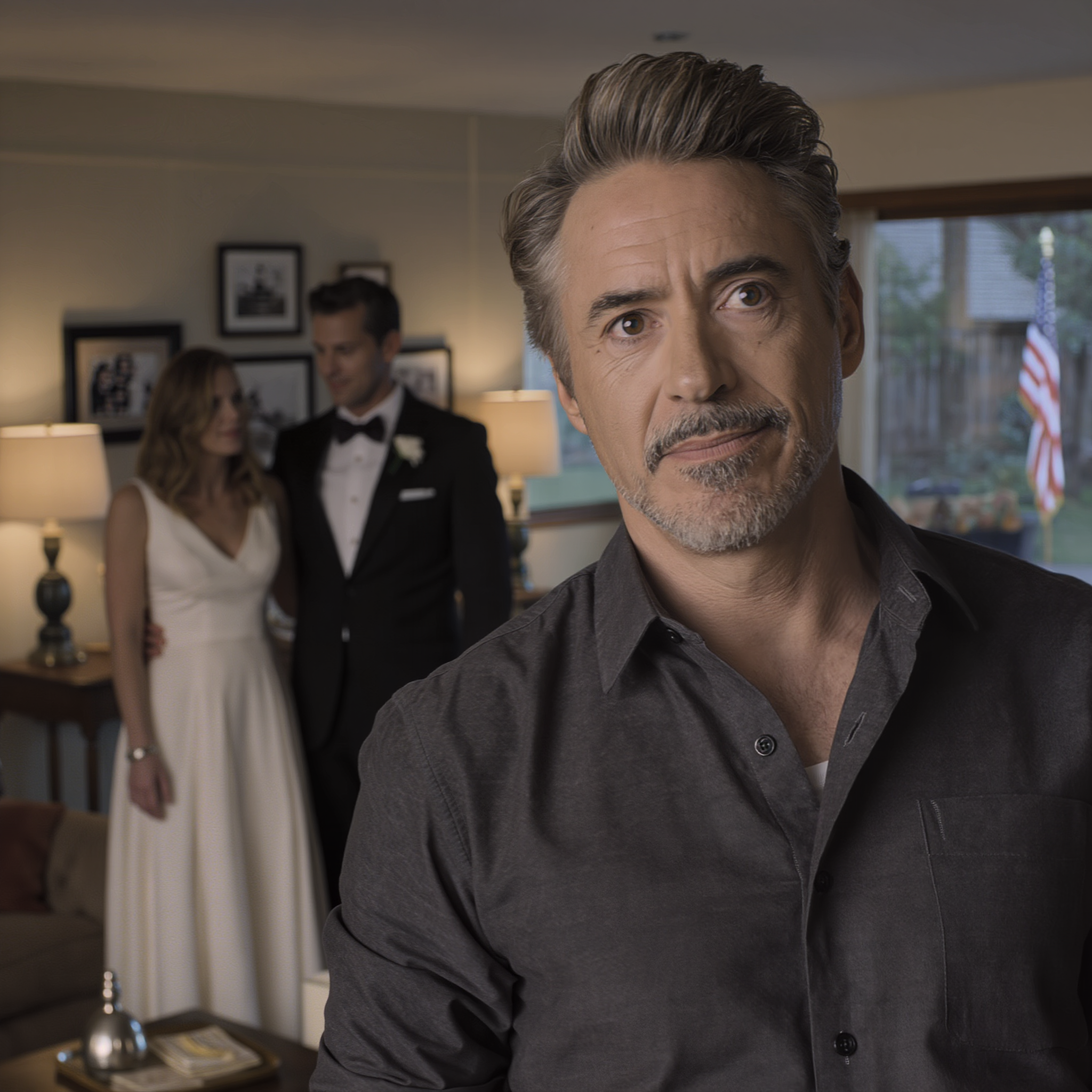
My daughter’s fiancé said, “We only want important people,” the night before — and the $100,000 wedding vanished. With those eleven words, my daughter’s fiancé, an investment banker, had completely misjudged the man in front of him: a modest father who owned a $120 million business empire and held real power in his hands.
You know what’s funny about rich people in places like Westchester and Manhattan? They never see the trap until it’s already snapped shut.
“We only want important people at our wedding. Vic, not your immigrant friends.”
My daughter’s fiancé sealed his fate with eleven words.
Austin Palmer, investment banker, old Westchester money, Yale graduate, stood in my modest New Rochelle living room on a Thursday night, under the yellow light of the ceiling fan I’d installed myself, and dismissed three decades of sweat and sacrifice like he was swatting away a fly.
I didn’t raise my voice. I didn’t defend myself. I just nodded slowly and gave him the same calm smile my construction crews know from job sites in the Bronx and Manhattan — the one that means someone is about to learn a very expensive lesson.
See, Austin thought he was talking to some lucky contractor who’d stumbled into money. Just another immigrant who’d gotten a little too big for his boots. He had no idea the “unimportant” immigrant he was dismissing owned the relationships that would make or break his perfect hundred‑thousand‑dollar Hudson River wedding.
Twenty‑four hours later, his wedding would vanish. His reputation would crumble. And one hundred and fifty guests — judges, bankers, country‑club regulars, plus a handful of my people from job sites up and down I‑95 — would watch, in real time, as Austin Palmer discovered who the important people in Westchester really were.
But first, let me show you how we got there.
The disrespect didn’t start Thursday night. It had been building for months, one small cut at a time, the way a building rots from the inside before a crack finally shows in the foundation.
It began in March, the first time Austin saw my guest list spread out on my kitchen table. Twenty‑seven names. My construction crew. My foreman. The guys who had helped me build Sterling Construction from nothing after I stepped off a plane at JFK with two suitcases and the address of a cousin in Queens.
Tony Ricci, who’d taught me American building codes in a freezing trailer in Jersey when I still spoke broken English.
Mike Sullivan, who’d vouched for me at the bank in Yonkers when no one wanted to lend to “some immigrant mason with big ideas.”
These weren’t just employees.
They were brothers.
“Dad, maybe we should reconsider some of these invitations,” Elena said gently, Austin’s arm looped around her shoulders. She sat at the table in the same seat where she’d done algebra homework while I came home in work boots caked with concrete dust.
“The Palmer family has certain expectations.”
Austin nodded approvingly like a teacher whose student had given the right answer.
“It’s nothing personal, Vic,” he said. “But a wedding reflects the families involved. We need to think about optics.”
Optics.
That word haunted me for weeks. Not love. Not joy. Not family.
Optics.
By April, my list had been “refined.” That was Elena’s word, but it came out sounding like his.
The construction guys were out.
My poker buddies from the old neighborhood in the Bronx — the ones who’d slipped me cash when jobs were slow in ‘98 — were gone.
Even Mrs. Rodriguez, the neighbor who’d watched Elena after school while I worked eighteen‑hour days pouring concrete on Midtown high‑rises, was deemed too informal for a Palmer wedding.
“We’re keeping it intimate,” Austin explained one night, reviewing seating charts at my kitchen table while the Yankees game murmured from the living room TV. The smell of garlic and tomatoes still hung in the air from my Sunday sauce.
“Just family and people who, well… people who matter in our circles.”
I watched my daughter’s face during those conversations. Elena, my pride and joy. The first Sterling to graduate from college, Fordham business honors, a girl who’d learned to translate bank letters for me when she was twelve.
She’d squirm, look down, twist the engagement ring on her finger, but she never spoke up.
Love makes you blind, I told myself. She’ll see eventually.
But it got worse.
In May, Austin suggested I might want to upgrade my wardrobe for wedding‑related events.
We were standing in my driveway in New Rochelle, the evening air thick with the smell of fresh‑cut grass and someone grilling two houses down. The Metro‑North horn wailed faintly from the tracks by the Hutch.
He handed me a business card for his family’s tailor on Madison Avenue.
“Nothing offensive, Vic,” he said. “But you’ll be meeting some important people. First impressions matter.”
Important people.
There it was again.
The real slap came in June during the venue walk‑through at Westchester Country Club.
I had paid the five‑hundred‑dollar deposit myself. Money I’d earned laying brick in one‑hundred‑degree heat on scaffolding in the Bronx while Austin was playing lacrosse at prep school and vacationing in the Hamptons.
“This is Elena’s father,” Austin told the wedding planner, a perfectly groomed woman in a black blazer and pearls. “He’s… he’s in construction.”
The way he said it, you’d think I dug ditches behind strip malls instead of building the luxury homes his friends lived in up on North Broadway.
But here’s what Austin didn’t know about that country club.
In 2019, Sterling Construction had renovated their entire east wing. Two million dollars of work. I knew every board member by name. I had their personal cell numbers saved in my phone. I’d saved their asses when the original contractor walked off the job two weeks before the big Fourth of July tournament.
I just smiled, shook hands, and let him keep talking.
By July, the pattern was impossible to ignore. Austin wasn’t planning a wedding; he was curating an image.
My business associates were “better suited for a corporate gala.”
My church friends from our small parish in the South Bronx “might not understand the social dynamics.”
“What?” I’d asked Elena after one of those phone calls. “What social dynamics?”
Even my brother Thomas, a successful cardiologist who’d been saving hearts at NewYork‑Presbyterian for twenty years, was questioned.
“Is he established in the community?” Austin had asked Elena one afternoon, not realizing I could hear them from the hallway.
Apparently, saving lives in Manhattan wasn’t “established” enough for the Palmers.
The final insult came three weeks before the wedding.
Austin arrived at my house with revised seating charts tucked into a leather portfolio that probably cost more than my first pickup truck.
We sat at the same kitchen table where Elena had learned her multiplication tables while I drank bodega coffee and kept the lights on.
“I made a few adjustments,” he said.
I found my name at table twelve. Back corner, next to the kitchen doors. The last table before the service hallway, where servers would rush in and out with plates.
Elena’s mother, God rest her soul, would have been mortified. Her framed picture sat on the mantle in the living room, watching this entitled boy disrespect everything we’d built.
“It’s just logistics, Vic,” Austin said, not meeting my eyes. “The front tables are for immediate family and key business contacts.”
Key business contacts.
I’d built a hundred‑and‑twenty‑million‑dollar company from nothing. Sterling Construction employed three hundred and forty people and had completed eight hundred and forty‑seven projects across three states. We’d built shopping centers off I‑87, office complexes in White Plains, hotels overlooking Times Square.
But I wasn’t a key business contact.
That was the night I started making phone calls. Quiet inquiries about Austin Palmer and Palmer Investment Group.
What I discovered made my blood run cold and my resolve turn to steel.
Austin wasn’t just dismissing my background.
He was hiding his own filthy secrets.
On paper, Palmer Investment Group was impressive. Eight hundred million in client assets. A sleek glass‑walled office on Park Avenue. A lobby with tasteful art, a receptionist who said “Good afternoon” in a voice that had probably never had to shout over construction noise.
But my private investigator — the same guy I used for employee background checks when I hired foremen and CFOs — found some interesting discrepancies.
Missing client funds.
Unexplained transfers.
Gambling debts totaling four hundred thousand dollars owed to casinos in Atlantic City.
Austin Palmer, the man judging my worthiness, was embezzling from elderly clients to fund his addiction.
The Securities and Exchange Commission had opened a formal investigation two months earlier. Federal agents in suits were quietly building a case in Washington while Austin picked out floral arrangements in White Plains.
Austin’s perfect wedding was scheduled just weeks before his perfect world collapsed.
But he didn’t know I knew.
He thought he was marrying into money. My money. Money he planned to use to plug the holes he’d drilled in other people’s retirement accounts.
The wedding was his last American‑dream hurrah.
Thursday night, when he stood in my living room and dismissed my immigrant friends, something inside me clicked like rebar locking into place.
This wasn’t about social status anymore.
This was about character.
This was about a man who’d never earned anything lecturing a man who’d earned everything.
Austin thought he was dealing with just another immigrant contractor who’d gotten lucky.
What he didn’t realize was that luck had nothing to do with it.
For thirty years, I’d built more than buildings. I’d built relationships. Trust. Respect. A reputation in Westchester and the five boroughs that opened doors and, when needed, closed them.
Friday morning, Austin Palmer would find out exactly how many doors I could close — and exactly how quickly his perfect wedding could disappear.
Friday morning, 7:30 a.m.
My phone rang while I was reviewing Sterling Construction’s weekly reports in my small office above our Yonkers warehouse. Through the dirty window I could see the hazy outline of Manhattan’s skyline.
Austin’s name flashed on the screen.
I always record my business calls. Thirty years in construction taught me people say things and then pretend they never said them. Austin was about to hand me twenty‑three minutes of gold.
“Vic, we need to talk,” he said. His voice had that entitled edge I’d grown to hate, the tone of a guy who’d never had to fix his own mistakes.
“I’ve been thinking about yesterday’s conversation.”
“Have you?” I asked.
“Now, look, I need you to understand something,” he started. “This wedding isn’t just about Elena and me. It’s about two families coming together. The Palmer name has meant something in Westchester for four generations.”
I stayed quiet. Let him dig.
“My mother is hosting a pre‑wedding dinner next Thursday,” he went on. “The guest list is selective. We’re talking about people who’ve shaped this community. Business leaders, political figures, old families.”
“I see,” I said.
“The thing is, Vic, your people, your friends from the construction site, they wouldn’t be comfortable in that environment,” he said. “And honestly, they might make other guests uncomfortable too.”
My grip tightened on the phone.
Your people.
“Don’t take it personally,” he added quickly. “It’s just reality. Look at the Hendersons. Their daughter married that tech entrepreneur last year. Beautiful wedding, but they kept the guest lists… complementary. His Silicon Valley crowd, her Greenwich society friends, everyone stayed in their lane.”
Their lane.
This boy was actually telling me to stay in my lane.
“Austin,” I said quietly, “let me ask you something. What exactly do you think I do for a living?”
There was a pause long enough for a freight train to pass the warehouse.
“You’re in construction,” he said finally. “You do well for yourself, obviously. Elena mentioned you own your own company. Sterling Construction, right? And that’s great, Vic. Really. My grandfather always said America needs skilled tradesmen. You’ve built a nice business, but this wedding, the people attending… we’re talking about a different level of society.”
A different level of society.
The man was explaining social hierarchy to me like I was a kid just off the bus at Port Authority.
“Tell me about this different level, son,” I said.
“Well, there’s my father’s law partners,” he said. “Federal judges. The Whitman family — they own the largest bank in the county. Senator Morrison will be there. These are people who move markets, who influence policy. They speak a certain language.”
“What language is that?” I asked.
“The language of real power, Vic. Old money. Established influence,” he said. “Look, I’m not trying to be offensive, but there’s… there’s a difference between new money and, well, money that’s been refined over generations.”
Refined money. Like wine in a cellar.
“So my money isn’t refined enough?” I asked.
“It’s not about the money itself,” he said. “It’s about understanding how to use it. How to present yourself. How to navigate certain social waters.” His voice softened, like he was explaining something to a confused immigrant he was graciously tolerating.
“My family has been part of the Westchester establishment for over a century,” he said. “We know these people. We understand their expectations. And I don’t… honestly, I don’t think you do. And that’s okay. You’ve achieved the American dream. You came here with nothing and built something. That’s admirable. But Elena is marrying into a different world now. A world with different rules.”
The American dream.
He said it like I’d won a participation trophy.
“Different rules,” I repeated.
“Exactly,” he said. “Look, Vic, I need you to understand something. This marriage is Elena’s chance to elevate herself. To become part of something bigger than… well, bigger than where she came from. But that requires sacrifice. It requires leaving certain things behind.”
“Certain things like her father’s history?” I asked. “Like the people who helped build her life?”
He hesitated.
“What exactly are you asking me to do, Austin?” I said.
“I’m asking you to think about what’s best for Elena,” he said. “Maybe you could host a separate celebration for your… your people. Something more casual. A barbecue, maybe, after the official wedding. That way, everyone’s included, but in appropriate settings.”
A barbecue for the unimportant people.
“And you think this is what Elena wants?” I asked.
“Elena wants to fit in with her new family,” he said. “She wants to be accepted, and she will be, as long as we’re thoughtful about how we handle these transitions.”
Handle these transitions.
“Vic, I’m going to be very direct with you,” he went on. “This wedding is about Elena’s future. Our future. The Palmer family has connections that could benefit her career, her social standing, her entire life trajectory. But that requires us to be strategic about associations.”
Strategic about associations.
I was an association to be managed.
“You know what, Austin,” I said finally, “you’re absolutely right. This wedding should absolutely reflect the kind of people you and Elena associate with.”
“Exactly,” he said, relieved. “I knew you’d understand.”
“Oh, I understand perfectly,” I said. “In fact, I think I understand better than you do.”
Something in my tone must have shifted, because Austin went quiet.
“Is everything okay, Vic?” he asked.
“Everything’s perfect, son,” I said. “You’ve made everything crystal clear.”
“Good. Good. So we’re on the same page about the guest list adjustments?”
“We’re definitely on the same page about who belongs at this wedding,” I said.
After I hung up, I sat in my office for five minutes, listening to the recording play back through my cheap speakers. Every word. Every insult. Every casual dismissal of my life, my friends, my worth.
Austin had just given me twenty‑three minutes of ammunition.
More importantly, he’d given me moral permission for what came next.
At 11:47 a.m., I made the decision, staring at my daughter’s graduation photo on my desk. Elena, valedictorian at Fordham Business School. The first Sterling to wear a cap and gown from a New York university. I’d worked double shifts for four years to pay her tuition. I never missed a parent conference. Never missed a graduation.
That girl was my everything.
My phone buzzed.
Elena.
“Dad,” she said, “Austin said you two had a good conversation this morning. He said you understood about the wedding arrangements.”
Her voice sounded relieved but fragile, like she’d been holding her breath for months.
“We definitely understood each other, sweetheart,” I said.
“Good,” she sighed. “I know this has been complicated, but Austin’s family has certain traditions. And honestly, Dad, this could be really good for my career. His father’s law firm represents some major corporations. There could be opportunities.”
“Elena,” I said, “do you love him?”
Silence.
Too long.
“Of course I love him, Dad. Why would you ask that?”
“Because love doesn’t ask you to be ashamed of where you came from,” I said softly.
Another pause.
When she spoke again, her voice was smaller, like the little girl who used to ask if Santa could find our small apartment in the Bronx.
“I’m not ashamed, Dad,” she said. “I’m just… I’m trying to fit into his world. And sometimes that means making adjustments.”
Adjustments.
Just like her fiancé said.
“Honey, let me ask you something,” I said. “When you bring Austin to our house, does he ask about the photos on the mantle? About your mother’s story? About how we got here?”
“Dad…”
“Does he ask about the business? About the people who helped us? Does he want to know anything about the life that gave him the woman he claims to love?”
Silence.
“Elena,” I said, “a man who truly loves you doesn’t ask you to erase your history. He celebrates it.”
“It’s not that simple, Dad,” she whispered. “His family… they have expectations.”
“And what about our family?” I asked. “What about our expectations?”
I heard her crying softly. My heart broke and hardened at the same time.
“Dad, I just want this to work,” she said. “I want to be accepted.”
“Baby girl,” I said, “you don’t need to be accepted by people who don’t accept you as you are.”
After she hung up, I opened my laptop and started making calls.
First call: Marcus Webb, my private investigator. We’d served in the Army together, two scared kids fresh off the bus at Fort Benning. He’d gone into law enforcement in the city. I’d gone into construction. Neither of us had forgotten what it felt like to be talked down to by officers who thought they were better born.
“Marcus, I need everything you can get me on Austin Palmer and Palmer Investment Group,” I said. “Financial records, client complaints, SEC filings, everything.”
“How fast?” he asked.
“By three,” I said.
“Jesus, Vic, that’s pushing it.”
“Push harder,” I said. “There’s a ten‑thousand‑dollar bonus if you deliver.”
Second call: Westchester Country Club.
“Hello, Mrs. Chen,” I said when the events coordinator picked up. “This is Vic Sterling from Sterling Construction. We need to discuss the Palmer‑Sterling wedding booking.”
There was a pause.
“Yes, I know it’s short notice,” I said. “No, there’s been a family emergency. We need to cancel.”
The conversation lasted twelve minutes. Mrs. Chen was apologetic but understanding. The five‑hundred‑dollar deposit would be fully refunded due to the circumstances.
Third call: Four Seasons, Westchester.
“Mr. Rodriguez,” I said when the general manager answered, “it’s Vic. We did your kitchen renovation in 2019 — the one that came in under budget and ahead of schedule, remember?”
He laughed.
“How could I forget? Saved my life during Thanksgiving,” he said.
“I need a favor,” I told him.
The Four Seasons had been Austin’s backup venue. The presidential suite he’d reserved for twenty‑eight hundred dollars a night suddenly became unavailable due to a major plumbing emergency that would require extensive work by — who else — Sterling Construction.
Fourth call: Glen Island Harbor Club.
This one was personal.
I’d built their entire marina in 2018, driving piles in the dead of winter while ice floated on the Hudson. Saved them four hundred thousand dollars when the original contractor tried to cut corners with substandard materials.
The owner, Bill Patterson, owed me more than money. He owed me his reputation.
“Bill, it’s Vic,” I said.
“Vic, my man,” he said. “What can I do for you?”
“I need the Palmer wedding booking canceled,” I said. “No, I can’t explain right now. Yes, I know it’s your biggest event this quarter. Bill, trust me on this one.”
By 2:00 p.m., Austin’s perfect wedding venues were disappearing one by one.
And I wasn’t anywhere close to finished.
At 2:47 p.m., Marcus called back.
“Vic, you’re not gonna believe what I found,” he said. “Austin Palmer is in deep.”
“How deep?” I asked.
“The SEC has been investigating Palmer Investment Group for eight months,” Marcus said. “Client fund misappropriation. We’re talking two‑point‑three million in suspicious transfers. And it gets worse. The guy has gambling debts. Big ones. Four hundred grand to three different casinos. There’s chatter he’s been using client money to cover losses.”
“When does this go public?” I asked.
“FBI raid is scheduled for Monday morning,” he said. “Arrest by Tuesday.”
Austin Palmer had one weekend left as a free man.
One weekend to find out what happens when you disrespect the wrong immigrant.
Friday, 3:15 p.m.
Austin’s panic started with a phone call from his wedding planner. I know because Elena called me twenty minutes later, her voice shaking.
“Dad, something weird is happening,” she said. “Austin just got a call from the wedding planner. The country club canceled our booking. They said there was a family emergency, but that doesn’t make sense. We had contracts.”
“That is strange, honey,” I said.
“And the Four Seasons just called too,” she added. “They said there’s a plumbing issue in the presidential suite. Major repairs needed. They’re refunding our deposit.”
I made sympathetic noises while scrolling through Sterling Construction’s client list on my computer. Thirty years of building relationships was about to pay off like compound interest.
“Dad, Austin is freaking out,” Elena said. “He’s calling everyone he knows, trying to find another venue, but everything good is booked months in advance.”
“I’m sure he’ll figure something out,” I said.
What Austin didn’t know — what nobody knew except me and Marcus — was how deep Sterling Construction’s roots ran through Westchester County. We hadn’t just built buildings.
We’d built the infrastructure of the county’s entire social life.
Rye Golf Club. Sleepy Hollow Country Club. The Maritime Aquarium in Norwalk. Half the places people took Instagram photos in this county had my company’s logo on their blueprints.
At 4:20 p.m., Elena called again. Now she sounded scared.
“Dad, three more venues just canceled,” she said. “Rye Golf Club, Sleepy Hollow Country Club, even the Maritime Aquarium. They all have different excuses, but Austin says this can’t be a coincidence.”
It wasn’t a coincidence.
It was a masterclass in leverage.
Rye Golf Club? Sterling Construction had built their new clubhouse in 2020. The project manager still sent me Christmas cards.
Sleepy Hollow Country Club? We’d renovated their pro shop after the 2019 flood, working nights around their tournament schedule, saving them two hundred thousand by refusing to cut corners.
Maritime Aquarium? My company had installed their new HVAC system. The curator’s daughter worked in my accounting department.
“When you build someone’s dream,” I’d told Elena earlier, “they remember.” She was starting to understand how literally I meant that.
“Austin thinks someone is sabotaging us, Dad,” she said. “He’s talking about hiring a private investigator.”
“That seems extreme,” I said.
“Is it?” she asked. “Dad, Austin asked me something today. He asked if you knew people at these venues. If you had connections.”
I stayed quiet.
“Dad, what did you tell him?” she asked.
“I said you were just a construction contractor,” she whispered. “That you wouldn’t have that kind of influence.”
Just a construction contractor.
Even my own daughter had swallowed Austin’s story about who was important and who wasn’t.
“Elena,” I said, “let me ask you something. In thirty years, how many buildings do you think Sterling Construction has worked on?”
“I don’t know,” she said. “Dozens?”
“Eight hundred and forty‑seven completed projects,” I said. “Shopping centers, office buildings, restaurants, hotels, country clubs, private homes. We’ve employed over six hundred people over the years. Subcontractors, suppliers, vendors. We’ve done business with every major construction supply company from here to Albany.”
Silence.
“When you build someone’s dream, Elena, they remember,” I said. “When you save their project, solve their problems, deliver on time and under budget, they remember. When you employ their sons, hire their cousins, sponsor their Little League teams, they remember.”
“Dad, what are you saying?” she asked.
“I’m saying that maybe Austin doesn’t understand what thirty years of honest work actually builds,” I said.
At 5:30 p.m., Austin called me directly.
His voice was tight, controlled, but the panic leaked through.
“Vic, I need to ask you something, and I need you to be straight with me,” he said.
“Of course,” I said.
“Do you have business relationships with any of the venues we’ve been looking at?” he asked.
“I’ve done work for various clients over the years,” I said. “Why?”
“Because seven venues canceled our wedding today,” he snapped. “Seven, Vic. That doesn’t happen by accident.”
“That does seem unusual,” I said.
“Vic, I need to know,” he said. “Are you interfering with my wedding?”
The question hung in the air like dust after demolition.
Austin Palmer, the man who’d spent months explaining to me how unimportant I was, now suspected I had the power to dismantle his perfect day.
“Austin, let me ask you something,” I said. “Yesterday you told me I didn’t understand important people. Today you’re asking if I have enough influence to affect your wedding. Which is it?”
Silence.
“I mean, according to you, I’m just an immigrant contractor who got lucky,” I said. “How could someone like me possibly have connections to seven different high‑end venues?”
“Vic, unless—”
“Unless, of course, you were wrong about what I built here,” I said. “Unless thirty years of hard work actually earned me something more than luck.”
I could practically hear him sweating through the phone.
“Look, if there’s been some kind of misunderstanding—”
“No misunderstanding, Austin,” I said. “You’ve been very clear about your opinion of me, and I’ve been very clear about understanding exactly where I stand.”
“What do you want?” he finally whispered.
There it was.
The question that proved Austin Palmer finally understood who held the power.
“I want you to have exactly the wedding you deserve, son,” I said.
“Meaning what?”
“Meaning a man who builds his life on other people’s money while hiding his own crimes probably shouldn’t be throwing elaborate parties,” I said.
Dead silence.
“That’s right, Austin,” I continued. “I know about Palmer Investment Group. I know about the SEC investigation. I know about your gambling debts. I know exactly who you really are.”
“You can’t prove anything,” he snapped.
“Monday morning, the FBI will prove plenty,” I said. “But don’t worry about Monday. Worry about tomorrow. Because tomorrow, one hundred and fifty guests are going to discover that the man judging everyone else’s worth isn’t worth a damn himself.”
I hung up.
Austin Palmer had asked for important people at his wedding.
Tomorrow, he’d get them.
FBI agents counted as important people, didn’t they?
Saturday morning, 8:15 a.m.
Austin showed up at my office unannounced. I was reviewing blueprints when my secretary buzzed me.
“Mr. Sterling, there’s an Austin Palmer here to see you,” she said. “He seems… agitated.”
“Send him in,” I said.
Austin walked through my office door like he owned the place — but the performance was cracking. Designer suit wrinkled. Perfect hair out of place. Dark circles smeared like bruises under his eyes.
This was a man who hadn’t slept.
“We need to talk,” he said.
I gestured to the chair across from my desk.
“Have a seat,” I said.
He remained standing, trying to project authority in a room that screamed my success — framed awards on the walls, photos of construction projects from Brooklyn brownstones to Midtown towers, a copy of my first New York building permit from 1995 in a cheap black frame. The American dream, one permit at a time.
“You think you’re clever, don’t you?” he said.
I leaned back in my chair.
“I think I’m thorough,” I said.
“Eleven venues, Vic,” he snapped. “Eleven. Every single backup option we had, gone overnight.”
“That’s unfortunate,” I said.
“Cut the crap,” he said. “You did this.”
“Did what exactly?” I asked.
His hands were shaking.
“You’ve systematically destroyed my wedding,” he said. “Used your… your connections to shut down every venue in the county.”
“Austin, yesterday you told me I was just a lucky contractor,” I said calmly. “Today you’re crediting me with controlling every venue in Westchester. Make up your mind.”
He started pacing, caged‑animal energy bouncing off the walls.
“This isn’t a game, Vic,” he said. “Elena is devastated. Her dream wedding is ruined because you can’t handle being excluded from the cool kids’ table.”
Excluded from the cool kids’ table.
Still talking to me like I was a child.
“Sit down, Austin,” I said.
Something in my tone made him freeze.
“I said, sit down.”
He sat.
I opened my desk drawer and pulled out a manila folder. Forty‑seven pages of SEC investigation documents.
Austin’s eyes widened when he recognized the federal letterhead.
“Let’s talk about games, son,” I said. “You’ve been playing a big one.”
I flipped the folder open.
“Two‑point‑three million dollars in client funds,” I said. “Twelve separate transactions. All to cover gambling debts at Atlantic City casinos.”
His face went white.
“Margaret Hoffman, eighty‑two years old,” I continued. “Retirement account. You transferred one‑hundred‑and‑eighty thousand dollars to your personal trading account. Told her it was a high‑yield investment.”
“You can’t prove—”
“Robert and Susan Chen,” I said, sliding another document across the desk. “Both in their seventies. Their grandson’s college fund, two‑hundred‑and‑forty thousand dollars. Gone.”
Bank records showing wire transfers to Borgata Casino stared up at him.
“Here’s what I find interesting, Austin,” I said. “You spent months telling me about important people, about refined money, about social standing. The whole time, you were stealing from elderly clients to feed your gambling addiction.”
“It’s not stealing,” he muttered. “It’s temporary liquidity management.”
Temporary liquidity management.
Even facing federal charges, he was still speaking in euphemisms.
“The FBI doesn’t see it that way,” I said. “Neither do your clients. Neither do the federal prosecutors who’ve been building this case for eight months.”
“How did you…” he started.
“How did I get this information?” I finished. “Same way I got the venue cancellations. Relationships, Austin. Real relationships built on trust and respect. Not inherited connections or social climbing.”
He leaned forward, desperation bleeding through his polished accent.
“Look, Vic, maybe we can work something out,” he said. “The wedding, Elena… she doesn’t deserve to suffer for our disagreements.”
“Elena deserves better than you,” I said.
“I love her,” he insisted.
“You love her money,” I said. “My money. You thought marrying Elena would solve your financial problems. Give you access to Sterling Construction’s assets. Let you pay back what you stole before anyone noticed.”
His silence confirmed everything.
“Here’s what’s going to happen, Austin,” I said. “Monday morning, FBI agents will arrest you for wire fraud, embezzlement, and securities violations. Your assets will be frozen. Your reputation will be destroyed. Your family name will be synonymous with financial crime. And Elena… Elena will discover she dodged a bullet. Instead of marrying a criminal, she’ll be free to find a man who deserves her.”
Austin stood up slowly.
“This isn’t over,” he said.
“You’re right,” I said. “It’s not over. It’s just beginning. In four hours, one hundred and fifty guests will arrive for your wedding. They’ll learn exactly who Austin Palmer really is.”
“You bastard,” he hissed.
“I’m an immigrant who built an empire through honest work,” I said. “You’re a trust‑fund criminal who destroyed elderly people’s lives for gambling money. Which one of us is the bastard?”
Saturday, 10:30 a.m.
Austin played his last desperate card.
I was having coffee at my kitchen table when Elena called, her voice brittle with anxiety.
“Dad, have you seen Austin’s Instagram?” she asked.
I opened my laptop.
Austin had posted a video thirty minutes earlier. Professional lighting. Composed expression. Sitting in what looked like his family’s wood‑paneled study in their Scarsdale estate, leather‑bound law books and framed Ivy League diplomas behind him.
“My friends,” he began, “I need to address some disturbing developments regarding my wedding today. It’s come to my attention that certain individuals have used unethical business practices to interfere with private family celebrations.”
The comments were already flooding in. Palmer family friends expressing outrage. Society connections offering support. Old Westchester money circling the wagons.
“Without naming names,” Austin continued, “I want everyone to know that intimidation and business coercion will not be tolerated. The Palmer family has served this community for four generations. We will not be bullied by those who mistake wealth for class.”
Wealth for class.
Austin was doubling down on social hierarchy, even with federal agents already reading his emails.
“Dad, people are sharing it,” Elena said, crying. “Austin’s friends, his family’s connections. They’re saying terrible things about new money, about immigrants who don’t understand American values.”
American values.
From a man who’d stolen two‑point‑three million dollars from elderly clients.
“The comments are getting worse, Dad,” she said. “Someone posted photos of our house, calling it immigrant gaudy. They’re saying you’re jealous of old American families.”
I scrolled through the responses.
Margaret Palmer, Austin’s mother, had shared the video with her own commentary.
Some people never learn their place in society, no matter how much money they acquire.
Their place in society.
Then I saw something interesting.
Senator Morrison had liked the post.
The same Senator Morrison who’d been at several Sterling Construction ribbon‑cuttings, praising my company’s contribution to local economic development for the cameras on Channel 12.
At 11:00 a.m., my phone rang.
Bill Patterson from Glen Island Harbor Club.
“Vic, I’m seeing some social media activity,” he said. “People are questioning your character, your business practices. Some of my board members are concerned about our association.”
“I understand, Bill,” I said.
“Look, I’ve known you for years,” he said. “You’re solid. But this Palmer kid has connections. Real connections. Federal judges, senators, old families with serious influence. If this gets ugly—”
“It’s already ugly, Bill,” I said. “The question is whether you believe in what I’ve built or what Austin Palmer inherited.”
A pause.
“What aren’t you telling me, Vic?” he asked.
“Monday morning, Austin Palmer will be arrested by the FBI,” I said. “Wire fraud, embezzlement, securities violations. He’s stolen over two million dollars from elderly clients to cover gambling debts.”
Silence.
“Jesus Christ, Vic,” Bill whispered. “You’re sure about this?”
“I have the federal investigation documents,” I said. “Forty‑seven pages of evidence. Banking records. Wire transfers. Client complaints. Austin Palmer is a criminal who’s been using his family name to cover his crimes. And he’s trying to drag your club into the mud to save his own reputation.”
“Exactly,” Bill said quietly.
At 11:45 a.m., I made my own social media post.
No professional lighting. No wood‑paneled study. Just text, simple and direct.
To the Westchester community:
Tomorrow, federal agents will arrest Austin Palmer for embezzling $2.3 million from elderly clients. Before you judge immigrant values versus American values, ask yourself which values include stealing from grandparents to fund gambling addictions.
I attached one document: a bank record showing Austin’s $180,000 transfer from Margaret Hoffman’s retirement account to his personal Vegas gambling expenses.
The response was immediate.
Margaret Palmer called Austin’s post fake news and demanded I retract my “libelous accusations.”
Senator Morrison quietly un‑liked Austin’s video.
Three board members from various venues called to confirm our business relationships remained solid.
But the real shift came at noon when Robert Chen, the elderly client whose grandson’s college fund Austin had stolen, shared my post with his own story.
This man destroyed my family’s future for poker chips. Seventy‑three years in America. Built a small restaurant empire in Queens. Saved every dollar for education. Austin Palmer stole my grandson’s Harvard dreams for blackjack tables.
Then Susan Hoffman posted.
My husband died believing his retirement was secure. Austin Palmer spent our life savings at casinos while I ate cat food to pay medical bills.
Twelve more victims came forward within two hours. Elderly immigrants. Working‑class families. Middle‑class retirees. All robbed by the man lecturing the county about American values.
The comment sections flipped.
Austin’s society friends went silent.
The narrative changed from immigrant overreach to criminal exposed.
At 2:00 p.m., Austin posted again.
This time, the polished mask was gone, replaced by raw desperation.
“These accusations are completely false,” he said. “My lawyers will address these defamatory statements. My family’s reputation will not be destroyed by jealous competitors who—”
He never finished the sentence.
The video cut off mid‑word because, at 2:03 p.m., three black SUVs had pulled into the Palmer family driveway in Scarsdale.
FBI agents, arriving eighteen hours early.
Someone had tipped them off that Austin might flee. Someone had provided evidence of ongoing financial crimes.
That someone might have been a concerned citizen.
A concerned citizen who happened to be an immigrant contractor and American citizen who understood the difference between inherited privilege and earned justice.
Saturday, 2:30 p.m.
While FBI agents searched the Palmer estate, I was having the most important conversation of my life.
Elena sat in my kitchen, the same kitchen where Austin had dismissed my immigrant friends two days earlier. Her wedding dress hung upstairs in her childhood bedroom, never to be worn. Her dreams were crumbling, but her eyes were finally clear.
“Dad, I need to know everything,” she said.
I spread the documents across the kitchen table like a dealer laying out cards in an Atlantic City casino. Bank records. SEC filings. Client testimonies. Gambling receipts.
Two years of Austin Palmer’s criminal activity documented in black and white.
“Margaret Hoffman,” I said. “Eighty‑two years old. Austin convinced her to move her retirement account to Palmer Investment for better returns. Then he transferred $180,000 to cover losses at Borgata Casino.”
Elena studied Mrs. Hoffman’s bank statements, her hands shaking.
“She trusted him,” Elena whispered. “They all trusted him.”
“Robert and Susan Chen,” I said. “Retirement savings gone. The Williams family — their daughter’s medical fund disappeared. Twelve families, Elena. Twelve families destroyed so Austin could chase his gambling addiction.”
“How long have you known?” she asked.
“I suspected something Thursday night,” I said. “Austin was too eager to marry into money. Too desperate to access Sterling Construction’s assets. So I hired Marcus to investigate. He found the SEC investigation Friday morning. The gambling debts. The pattern of client fund theft. Austin thought he was marrying a rich man’s daughter to solve his problems.”
Elena was quiet for a long moment, processing the betrayal. Not just Austin’s betrayal of his clients, but his betrayal of her.
“He never loved me, did he?” she said.
“Honey—”
“No, Dad, be honest,” she said. “He saw dollar signs, didn’t he? Saw Sterling Construction’s value and thought he’d found his solution.”
I nodded. Truth was better than comfort.
“Three weeks ago, Austin asked me about making you a partner in Palmer Investment Group after the wedding,” I said. “He said it would combine our families’ business interests. I thought it was suspicious. You thought it was romantic.”
Tears spilled down her cheeks.
“I was so stupid,” she said.
“You were in love,” I said.
“There’s something else,” she whispered. “Last month, Austin asked me to co‑sign a loan application. Said it was for a business expansion. I almost did it.”
“Almost?” I asked.
“I came to you, remember?” she said. “I asked about potentially investing in Austin’s company. You suggested I wait until after the wedding to make any financial commitments.”
I remembered.
Elena had been excited about joining their business interests. I’d stalled, told her to focus on wedding planning first. Something about Austin’s eagerness had bothered me.
“If I’d signed that loan…” she began.
“If you’d signed that loan, Elena, you’d be legally responsible for his debts,” I said. “You would have been his exit strategy.”
She sat back down, the full scope of Austin’s manipulation finally settling over her.
“He didn’t just steal from his clients, Dad,” she said softly. “He was planning to steal from us too.”
“The good news is he failed,” I said. “And Monday morning, justice catches up with him.”
Elena looked at the evidence spread across our kitchen table. Twelve families destroyed. Millions stolen. Lives ruined.
“Dad, I want to do something for these families,” she said. “Mrs. Hoffman, the Chens, all of them. Sterling Construction should help them somehow.”
That’s when I knew my daughter was going to be just fine.
Saturday, 4:00 p.m.
The Sterling family estate — a modest riverfront property I’d bought ten years earlier after our biggest Manhattan hotel project — buzzed with confused energy.
Against all odds, Elena had made a decision.
The wedding was canceled.
But the gathering would go on.
One hundred and fifty guests had traveled for this day. They deserved to know the truth.
“Ladies and gentlemen, thank you all for coming,” Elena said.
She stood on the back patio, still in her wedding dress, but her veil was gone. Behind her, the Hudson River sparkled in the late‑afternoon sun; a Metro‑North train hummed past on the far bank, carrying commuters back to the city where I’d spent my life building other people’s dreams.
“I know you’re confused about the venue changes,” she continued. “The last‑minute messages. I want to explain everything.”
I watched from the kitchen window as our guests assembled on the lawn.
Austin’s family sat in the front row. Margaret Palmer, pale and furious, flanked by federal judges and old Westchester families.
My construction crew stood at the back, uncomfortable in their borrowed suits from a discount shop in the Bronx but loyal to the end.
Senator Morrison was there, looking increasingly nervous as unmarked sedans eased into discreet positions along the road. FBI agents, blending in with the caterers and hotel staff.
“This morning, I learned something about the man I was supposed to marry,” Elena said, her voice carrying across the gathering. “Something that changed everything.”
A black Mercedes pulled up the driveway.
Austin, released on emergency bail, stepped out with his lawyer. His face was haggard. His expensive suit wrinkled from federal processing.
He’d posted a $500,000 bond. Money that probably belonged to his victims.
“Elena, what are you doing?” Austin called out, pushing through the crowd.
“Telling the truth,” she said.
He reached the patio, his lawyer whispering urgently in his ear.
“This is a private family matter,” the lawyer said. “You don’t need to—”
“Austin Palmer stole $2.3 million from elderly clients to fund his gambling addiction,” Elena said.
The crowd went dead silent.
You could hear the Hudson River lapping against the dock.
Margaret Palmer stood up.
“This is outrageous,” she said. “How dare you make such accusations?”
“FBI agents arrested him six hours ago,” Elena continued. “Wire fraud. Embezzlement. Securities violations. Twelve families destroyed so he could play poker in Atlantic City.”
Austin’s face turned crimson.
“Elena, you’re hysterical,” he said. “The stress of the wedding, the venue problems—”
“There were no venue problems, Austin,” she said. “My father canceled every booking because he discovered what you really are.”
Every head turned toward me.
I stepped out onto the patio, carrying the manila folder that had started this whole chain of events.
“Margaret Hoffman,” I said, my voice steady. “Eighty‑two years old. Trusted Austin with her retirement account. He stole $180,000 for a weekend in Vegas.”
Austin’s lawyer grabbed his arm.
“Don’t say anything,” the lawyer hissed. “Not a word.”
“Robert and Susan Chen,” I continued. “Married fifty years. Their grandson’s college fund, $240,000, spent on blackjack tables while they ate pasta every night to save money.”
I pulled out the bank records and held them up for everyone to see.
“Mary Rodriguez, seventy‑four,” I said. “Needed home health care after her stroke. Austin emptied her medical fund for a poker tournament. She lost her house.”
Senator Morrison was edging toward his car.
Several Palmer family associates were checking their phones, probably texting their own lawyers.
“But here’s what Austin really thought of all of you,” I said. “Two days ago, he called me and told me he only wanted important people at his wedding. Said my immigrant friends wouldn’t understand the language of real power.”
I pulled out my phone and connected it to the portable speaker Elena had set up for wedding music.
Austin went white.
“Vic, don’t,” he said.
The recording of his voice filled the garden.
“The language of real power, Vic. Old money, established influence. Look, I’m not trying to be offensive, but there’s a difference between new money and, well, money that’s been refined over generations… This marriage is Elena’s chance to elevate herself, to become part of something bigger than… well, bigger than where she came from…”
Guests shifted uncomfortably in their chairs as Austin’s own words condemned him.
I stopped the recording.
“You know what, Mrs. Palmer?” I said. “Austin was right about one thing. This marriage would have elevated Elena. It would have elevated her from honest success to criminal accomplice.”
Austin finally exploded.
“You sanctimonious bastard!” he shouted. “You think you can destroy my family because we wouldn’t accept your blue‑collar friends? You think your construction money makes you better than four generations of Palmer achievement?”
“No, Austin,” I said. “I think my honest work makes me better than your stolen money.”
The crowd was riveted. This was better than any afternoon soap opera.
“You want to talk about achievement?” I continued. “Sterling Construction has employed over six hundred people in thirty years. Built 847 projects. Contributed millions in local taxes. Created jobs. Built communities. Earned every dollar through sweat and skill.”
I gestured toward his family.
“Palmer Investment Group stole retirement funds from grandparents to pay gambling debts,” I said. “Which family’s achievement are we celebrating here?”
Austin lunged toward me, his lawyer barely restraining him.
“I’ll destroy you,” he spat. “My family has connections you can’t imagine.”
“Your family’s connections are abandoning you faster than rats from a sinking ship,” I said.
I pointed to the half‑empty section where Austin’s business associates had been sitting.
“Senator Morrison left twenty minutes ago,” I said. “Judge Whitman is in his car making phone calls. Your old‑money friends don’t want to be photographed with a federal criminal.”
Elena stepped between us.
“Austin, it’s over,” she said. “The FBI has your bank records, your client files, witness testimonies from twelve families. You’re going to prison.”
“Elena, please,” he said. “We can work through this. My lawyer says—”
“Your lawyer says to keep quiet because anything you say can and will be used against you in federal court,” I said.
Margaret Palmer finally spoke. Her voice was ice cold.
“Elena, dear, you’re making a mistake,” she said. “Austin made some poor financial decisions, but—”
“He destroyed people’s lives for poker chips,” Elena said. “Mrs. Palmer, while you were teaching him about social superiority, you forgot to teach him basic human decency.”
“How dare you?” Margaret gasped.
“How dare I what?” Elena asked. “Tell the truth? Austin spent months explaining to my family that we weren’t good enough for yours. Turns out your family wasn’t good enough for basic honesty.”
FBI Special Agent Rodriguez stepped forward. I’d called him an hour earlier, suggested he might want to witness Austin’s public statements.
“Mr. Palmer, you’re in violation of your bail conditions by approaching witnesses in your case,” he said. “You need to come with us.”
“This is harassment,” Austin shouted. “I have rights!”
“You have the right to remain silent,” Agent Rodriguez said. “Which you probably should have used ten minutes ago.”
As they led Austin away in handcuffs for the second time in one day, Elena turned back to the remaining guests.
“To Austin’s family and friends,” she said, voice steady, “I’m sorry you had to discover this way that the man you trusted was a criminal. To my father’s friends, thank you for showing me what loyalty and integrity look like. And to the families Austin destroyed, Sterling Construction will be contacting you this week about victim assistance.”
The Palmer section was nearly empty now. Old Westchester money had vanished like smoke when the truth hit fresh air.
But my construction crew — my unimportant immigrant friends — surrounded Elena with support and love.
Margaret Palmer stood alone by her Mercedes, four generations of refinement unable to shield her from her son’s crimes.
“Mrs. Palmer,” I called out as she reached her car. “You were right about one thing. Some people never learn their place in society. Your son never learned that his place was as an honest man, not a criminal who preys on the elderly.”
She drove away without a word.
Elena found me by the river an hour later, as the last guests were leaving. The sun dipped low over the Hudson, turning the water gold. The white rental chairs stood empty on the grass, like a wedding ghost.
“Dad, do you think I made the right choice?” she asked.
I looked at my daughter — beautiful, strong, finally free from Austin’s manipulation.
“Honey, you made the only choice that lets you look yourself in the mirror,” I said.
“The Palmers will never forgive this public humiliation,” she said.
“The Palmers will be too busy with federal prosecutors to worry about us,” I said.
She smiled for the first time in days.
“So what happens now?” she asked.
“Now we get back to being a family that earns respect instead of demanding it,” I said.
Monday morning, 8:47 a.m.
Austin’s arrest made the front page of the Westchester Journal News.
INVESTMENT MANAGER CHARGED IN $2.3 MILLION ELDERLY FRAUD SCHEME.
The photo showed Austin in handcuffs, his Yale ring visible as federal agents led him from the courthouse in White Plains.
I was having coffee when Elena called from her apartment in Manhattan.
“Dad, have you seen the news coverage?” she asked.
“Hard to miss,” I said.
“Channel 12 wants an interview,” she said. “They’re calling it immigrant success versus old‑money crime.”
“I told them no comment,” I said.
“Good,” I added. “Let the evidence speak.”
At 10:00 a.m., Margaret Palmer called my office directly.
“Mr. Sterling, I want to discuss a settlement for the… misunderstanding,” she said.
“There’s no misunderstanding, Mrs. Palmer,” I said. “Your son is a criminal.”
“The Palmer family has contributed to this community for over a century,” she said. “Surely, we can reach some accommodation that protects both our reputations.”
“Your reputation was destroyed by your son’s choices, not my actions,” I said.
She hung up.
By noon, the full scope of Austin’s crimes had emerged. Seventeen total victims. $2.7 million stolen. Federal prosecutors were seeking eight to twelve years in prison.
That evening, Elena drove up carrying Chinese takeout from our old neighborhood restaurant in the Bronx.
“The one Austin said wasn’t refined enough for Palmer family dinners,” she said with a sad smile.
We ate at the same kitchen table where this whole mess had started.
“Dad, I’ve been thinking about what you said,” she said. “About earning respect versus demanding it.”
She took a breath.
“I quit my marketing job today,” she said. “I want to come work for Sterling Construction.”
I nearly choked on my lo mein.
“Elena, you have a business degree from Fordham,” I said. “You could work anywhere.”
“I want to work somewhere I’m proud of what we build,” she said. “Literally and figuratively.”
Three months later, Austin Palmer was sentenced to nine years in federal prison. He’ll serve at least seven.
Seventeen families received restitution from court‑ordered asset seizures. It wasn’t enough.
So Sterling Construction established a victim assistance fund. We couldn’t give them back their innocence, but we could help rebuild their security.
Elena officially joined the company as Director of Community Relations. Her first project: affordable housing for elderly immigrants in Westchester. People like the ones Austin had preyed on, people like I used to stand in line with at the DMV clutching green cards and paperwork.
Margaret Palmer moved to Florida. The Palmer estate went on the market, the glossy real‑estate photos erasing the whispers about FBI raids and Instagram meltdowns.
Four generations of Westchester prominence ended by one generation’s greed.
Last week, Elena started dating Marcus Webb’s son, a public defender who represents families Austin would have dismissed as unimportant. They met at a community fundraiser for our new housing project in Yonkers.
Sometimes the best revenge isn’t revenge at all.
Sometimes it’s just living well, building honestly, and teaching your children that respect is earned one relationship at a time.
The important people understand that.
The rest never did matter anyway.
News

My husband said, ‘You should move somewhere else to live.’ With no money, I was forced to go to my husband’s company to work as a cleaner to support my children. Until one day, the secretary hurried over and whispered, “Hurry, hide under the desk. You need to hear the truth!”
Serena Hayes dipped her mop into the gray, soapy mess. The water was hot, but her hands had been freezing…

‘She’ll learn a lesson,’ my dad said after leaving my 8-year-old daughter alone at the airport while my entire family flew to Disney. In the family group chat, the message was simply: ‘Come pick her up. We’re about to board.’ My mother added coldly, ‘Don’t make us feel guilty.’ The moment their plane landed…
“She’ll learn a lesson,” my dad said, like he was talking about forgetting a homework assignment and not abandoning…

At my son’s 35th birthday party, he grabbed the microphone and announced in front of everyone: ‘This party was paid for entirely by my future father-in-law, my mother didn’t contribute anything at all.’ I calmly stood up and walked out. That night, I quietly rearranged my entire financial plan, transferring the company I had painstakingly built to someone else. The next morning, when I woke up, I saw… ’76 missed calls.’
My son humiliated me in front of two hundred people by saying I had not even paid for his cake….

This Christmas, my name is not on my family’s guest list. In their eyes, I am just an “invisible” daughter. I quietly booked first-class tickets to take my grandmother to Paris. On Christmas Eve, I calmly informed them and presented the family trust papers that I had rearranged.
This Christmas, I am not on the guest list of my own family. In their eyes, I am still the…

‘Sir, that boy lives with me,’ I said loudly when I saw the portrait in the mansion. I work as a cleaner in New York. I know him!
I clean houses for a living. Not the life I imagined when I left Wyoming for the East Coast with…

‘Move out. You have two days.’ – My parents gave my apartment to my brother right at his engagement party… I used to think my parents truly cared about me, until they publicly gave my apartment to my twin brother – the apartment I had put $30,000 into, which was my entire savings. The moment everyone applauded to congratulate them was also the moment I realized that, for them, everything between us had ended from that day on.
My parents gave my apartment to my brother at his engagement party in a leafy suburb just outside Chicago, without…
End of content
No more pages to load